
Concussion Physiotherapy
Assessment and graded return-to-activity rehabilitation for concussion in Mayville, Pretoria — supporting a safe, structured recovery.
- No referral needed
- Medical aid billed directly
- Full-hour assessment
When to Seek Emergency Care First
Most concussions are managed safely with physiotherapy support and a gradual return to activity. However, some symptoms need urgent medical assessment — at a hospital or emergency room, not a physiotherapy appointment — before anything else. Seek emergency care immediately if you or someone you're caring for, after a head injury, experiences:
- Loss of consciousness, even briefly
- Repeated vomiting
- A worsening headache that doesn't improve
- Seizures or convulsions
- Increasing confusion, agitation, or difficulty waking up
- Slurred speech, weakness, or numbness in the arms or legs
- One pupil appearing larger than the other
- Any suspicion of a neck injury alongside the head injury
Introduction
A concussion is a mild traumatic brain injury that can happen after a knock to the head, a fall, or even a sudden jolt to the body that causes the brain to move inside the skull. It's far more common than most people realise. Research estimates that around 42 million concussions occur worldwide each year, with many going undiagnosed, especially in sport and everyday accidents.
Symptoms such as headaches, dizziness, fatigue, blurred vision, or feeling mentally "foggy" can make work, exercise, and daily tasks far more challenging than expected. If none of the emergency warning signs above apply, the reassuring news is that most concussions recover well with the right guidance, gradual return to activity, and physiotherapy support, though the pace and approach should always be personalised, not generic.
At Peak Physiotherapy in Mayville, we support concussion recovery for patients from The Moot, Wonderboom, Les Marais, and Rietfontein, as well as further afield across Pretoria, including athletes needing a structured, staged return to sport. A full-hour first assessment gives time to properly evaluate your neck, balance, vision, and exercise tolerance, building a recovery plan around your specific symptoms rather than a generic timeline.
Anatomy & Biomechanics
The brain is a soft, highly active organ that sits inside the skull, protected by fluid and membranes. It is well designed to cope with normal movement, but rapid acceleration, deceleration, or rotational forces, such as a fall, collision, or sudden stop, can cause the brain to shift and stretch briefly inside the skull. This leads to a temporary disruption in how brain cells communicate, rather than structural damage.
When these systems are out of sync, symptoms like dizziness, headaches, poor concentration, and unsteadiness can occur. Importantly, this does not mean the brain is damaged. It means it needs time, appropriate guidance, and gradual, monitored loading to return to normal function. The brain is highly adaptable and responds well to guided rehabilitation, provided the pace is appropriate and any warning signs are taken seriously.
- The brain – responsible for thinking, memory, and processing speed.
- The vestibular system (inner ear) – which controls balance and spatial awareness.
- The visual system – coordinating eye movement and focus.
- The cervical spine (neck) – which plays a key role in head control and sensory input.
What Causes the Symptoms (Acute vs Ongoing)
Most concussions occur after a clear event: a fall and hitting the head on the ground, a sports collision or tackle, a car accident or whiplash-type injury, or a blow to the head from an object. Symptoms may appear immediately or develop over the following hours or days, which is part of why monitoring in the first 24–48 hours matters.
The first 24–48 hours after a head injury need careful monitoring, watching for any of the emergency warning signs listed above. After this initial period, recovery generally involves a gradual return to normal day-to-day activities, work, light routine tasks, and ordinary movement, while still avoiding strenuous exercise, training, or contact sport until symptoms have settled and a proper reassessment has taken place.
Some people experience symptoms lasting longer than expected. This doesn't automatically mean recovery has failed or that something serious is wrong, though it does warrant a proper reassessment. There's often no single ongoing cause. The nervous system may remain sensitive to movement, light, or cognitive load, neck stiffness and balance issues can continue to drive symptoms, and both extremes, prolonged complete rest with no gradual return, or returning to normal activity and training too quickly without adequate early rest, can contribute to symptoms persisting longer than expected. Getting that early balance right matters.
- Monitor closely for emergency warning signs in the first 24–48 hours
- After that, a gradual return to normal daily activities generally begins, not exercise or sport yet
- Rushing back to training or contact sport too early is a common contributor to prolonged symptoms
- Ongoing symptoms are a reason for reassessment, not just something to wait out
Common Symptoms
Symptoms vary between individuals and can fluctuate day to day. Common experiences include:
- Headache or pressure in the head
- Dizziness or light-headedness
- Feeling foggy, slowed down, or not quite yourself
- Sensitivity to light or noise
- Blurred or double vision, eye strain
- Poor concentration or memory
- Fatigue, especially with mental tasks
- Neck pain or stiffness
- Feeling unsteady or off balance
Symptoms are often aggravated by screen time, busy environments, rapid head movements, physical exertion too early, stress, or poor sleep.
How This Affects Your Day-to-Day
Concussion recovery rarely stays contained to just physical symptoms. It can quietly limit some of the most ordinary daily moments.
- Struggling to concentrate through a full day at work or study
- Avoiding busy environments like shopping centres or crowded meetings
- Feeling overwhelmed by screen time you'd normally not think twice about
- Sitting out training or sport, unsure when it'll be safe to return
For many people, it's not just the symptoms themselves, but the uncertainty of not knowing when things will feel normal again that wears them down.
The Solution: Getting the Right Diagnosis
Understanding exactly what's driving your symptoms, whether neck-related, vestibular, or visual, rather than guessing, is the most reliable way to guide a safe recovery.
Common Diagnoses
Several terms are commonly used alongside concussion. These labels describe different aspects of the same injury and recovery process, rather than separate or more serious conditions:
Concussion (mild traumatic brain injury)
is a temporary disruption in brain function following a knock or rapid movement, the primary diagnosis this page addresses.
Post-concussion syndrome
describes ongoing symptoms beyond the expected recovery period, often related to nervous system sensitivity rather than ongoing structural injury.
Cervicogenic headache
refers to headaches driven by neck stiffness or joint irritation after trauma, common alongside concussion given the frequent involvement of the neck in the same injury mechanism.
Vestibular dysfunction
involves balance and dizziness symptoms linked to the inner ear-brain connection, and is one of the most treatable components of persistent concussion symptoms.
Visual or oculomotor dysfunction
involves difficulty with eye tracking or focus, commonly contributing to headaches and fatigue, particularly with screen use or reading.
How Physiotherapy Can Help
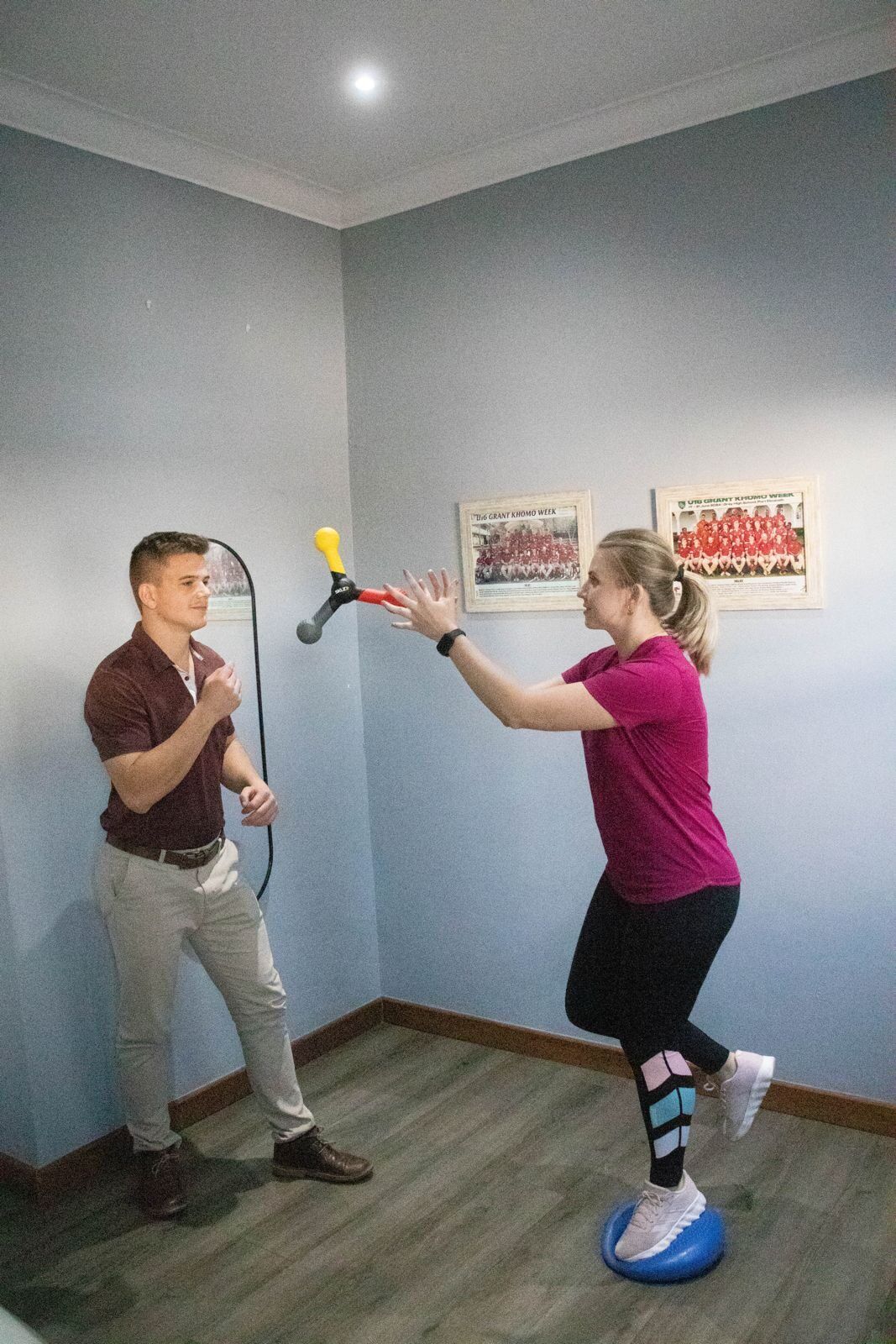
Physiotherapy is an important part of concussion recovery, particularly when symptoms linger or interfere with daily life. Treatment begins with a comprehensive assessment, evaluating your neck, balance, eye movements, posture, exercise tolerance, and symptom response to physical and mental load.
You'll receive a clear explanation of what's driving your symptoms and realistic expectations for recovery — not a generic timeline. Treatment typically includes:
- Neck-focused treatment (joint mobilisations, targeted exercise) where cervical involvement is contributing to headaches or dizziness
- Vestibular and balance retraining where inner-ear-related dizziness is present
- Graded, monitored return to physical activity — a structured progression through activity levels, not a fixed calendar, and stopped or slowed if symptoms worsen at any stage
- Movement analysis to assess exercise tolerance and guide safe progression
For athletes, return-to-play follows established staged concussion protocols — progressing through light activity, sport-specific training, and non-contact training before any return to contact, with each stage cleared before moving to the next. This structured approach draws directly on BokSmart-certified match-day concussion protocols and provincial rugby experience through Valke Rugby Union.
Most concussions resolve within 4 to 12 weeks, and recovery timelines are always approximate. This is not a quick process, and returning to sport too soon, before symptoms have properly settled and a full reassessment has taken place, is one of the most important risks to avoid. A structured, monitored approach generally supports better outcomes than either complete rest or rushing back to activity. We regularly work with athletes and everyday patients across Pretoria, The Moot, and Mayville managing concussion recovery, from initial injury through to full, confident return to sport, work, or daily activity.
Related Conditions We Treat
Not sure this is the right fit? These related conditions might explain what you're experiencing more precisely: Neck Pain, TMJ & Headaches, Back & Sciatica Pain.
Frequently Asked Questions
What is a concussion?
A concussion is a mild traumatic brain injury caused by a knock to the head or a sudden jolt that moves the brain within the skull, temporarily disrupting normal brain function.
Do concussions always show up on scans?
No. CT and MRI scans are often normal after a concussion, since the injury involves temporary disruption in brain cell communication rather than structural damage visible on standard imaging. A normal scan doesn't mean the concussion wasn't real or significant.
How long does concussion recovery take?
Most concussions resolve within 4 to 12 weeks, and recovery timeline varies by individual. This isn't a quick process, and returning to sport or strenuous activity too soon is one of the most important risks to avoid. A structured, monitored approach generally supports better outcomes than either complete rest or rushing back to activity.
Can physiotherapy help with concussion symptoms?
Yes, particularly for persistent symptoms. Physiotherapy can address neck-related, vestibular (balance), and visual contributors to ongoing concussion symptoms, alongside guiding safe, graded return to activity.
Should I rest completely after a concussion?
Brief initial rest (24–48 hours) is appropriate, but current guidance generally supports a gradual, monitored return to light activity after that rather than prolonged complete rest, which has been shown to sometimes delay recovery.
When should I see a doctor instead of a physiotherapist for a head injury?
Immediately, if you experience any of the emergency warning signs listed at the top of this page: loss of consciousness, repeated vomiting, worsening headache, seizures, confusion, slurred speech, weakness, or unequal pupils. For typical concussion symptoms without these red flags, physiotherapy assessment is appropriate.
Can I return to sport before all my symptoms are completely gone?
Return-to-play generally follows a staged protocol where each level must be symptom-free before progressing to the next, culminating in medical and/or physiotherapy clearance before contact sport. This structured approach exists specifically to avoid returning too early.
Is it safe to look at screens after a concussion?
Screen use often needs to be temporarily reduced if it aggravates symptoms, but complete avoidance usually isn't necessary or sustainable. Your physiotherapist can guide a practical approach based on your specific symptom triggers.
Can neck problems cause concussion-like symptoms?
Yes. The neck is frequently injured alongside the head in the same incident, and neck-related symptoms (headache, dizziness) can overlap significantly with concussion symptoms, which is why a thorough assessment covers both.
Do you treat concussions in children?
Concussion assessment and management principles apply across ages, though the specific approach with children involves additional considerations. Get in touch to discuss your child's situation.
Does medical aid cover concussion physiotherapy?
Yes, we bill most South African medical aids directly. Get in touch and we'll confirm your specific plan's benefit.
Do I need a referral to see you for concussion management?
No. You can book directly. If you've been seen at a hospital or by a doctor following your injury, bringing that information to your first session is helpful.
Peak Physiotherapy · Mayville, Pretoria
Ready to get moving again?
Book an assessment and get a clear plan for concussion — no referral needed.