
Wrist Pain Physiotherapy
Assessment and treatment for tennis elbow, wrist strain, and repetitive injury in Mayville, Pretoria — restoring grip, strength, and pain-free use.
- No referral needed
- Medical aid billed directly
- Full-hour assessment
Introduction
Wrist and hand pain can be surprisingly disruptive, affecting everything from typing and gripping to lifting, training, and even sleeping. These small but complex joints are involved in almost every daily task, which means irritation or overload can quickly become noticeable. Conditions such as carpal tunnel syndrome alone are estimated to affect around 3–6% of adults, highlighting just how common wrist and hand problems are. Wrist pain goes by many names too, including tendinopathy, De Quervain's, trigger finger, and carpal tunnel syndrome, depending on which structures are involved.
Whether symptoms started suddenly after a fall or gradually from repetitive work, gym training, or racquet sports, they can impact productivity, confidence, and independence. The good news is that most wrist and hand conditions respond very well to physiotherapy, helping restore movement, strength, and trust in your hands again.
At Peak Physiotherapy in Mayville, we treat wrist and hand pain in patients from The Moot, Wonderboom, Les Marais, and Rietfontein, as well as further afield across Pretoria. A full-hour first assessment gives us time to properly distinguish between joint, tendon, and nerve-related sources of pain, an important distinction since treatment differs.
Anatomy & Biomechanics
The wrist and hand are made up of a finely balanced system of bones, joints, muscles, tendons, and nerves that work together to provide both strength and precision. Unlike larger joints that mainly move in one or two directions, the wrist and hand are designed for controlled mobility, allowing you to grip, twist, push, pull, and perform detailed tasks with accuracy.
At the wrist, several small bones move together to absorb load and transfer force from the forearm into the hand. The fingers and thumb then rely on a combination of tendons and small muscles to fine-tune movement and strength. Because this system is so intricate, even small changes in load, posture, or repetition can lead to pain over time, often without any single injury or obvious damage.
Pain usually reflects tissues being asked to do more than they're currently prepared for, not that something is "out of place." With the right rehabilitation, these tissues adapt well.
- Wrist joint (radiocarpal joint) – where the forearm bones meet the wrist, allowing bending, extending, and side-to-side movement
- Carpal joints – a cluster of small bones that work together to distribute load and fine-tune wrist movement
- Finger and thumb joints – allowing the precise grip, pinch, and dexterity needed for daily tasks
- Tendons – connecting forearm muscles to the fingers and thumb, powering grip and fine movement
- Ligaments – providing stability across the many small joints of the wrist and hand
- Median nerve – passing through the carpal tunnel at the wrist, supplying sensation to the thumb, index, and middle fingers
What Causes the Pain (Acute vs Chronic)
Wrist and hand pain can develop suddenly or build up gradually, and both patterns are very common.
Acute pain often follows a clear event such as falling onto an outstretched hand, lifting or carrying a heavy object, a sudden twist through the wrist during sport or work, or direct impact to the hand or fingers. These episodes can feel alarming, especially if the wrist swells or bruises quickly, but they usually reflect tissue irritation rather than serious structural damage.
Chronic pain typically develops from repeated, smaller stresses over time: prolonged typing or mouse use, repetitive gripping or tool use, returning to gym or manual work too quickly, or long hours on a phone or tablet with sustained wrist positions. Over time, the tendons and small muscles of the hand become less tolerant of the repetitive load they're being asked to manage, and symptoms build gradually rather than appearing all at once.
- Wrist and hand pain is very common
- There is often no single clear cause
- Pain usually reflects a load-versus-capacity mismatch, not damage
- Wrist and hand tissues are highly adaptable and respond well to rehabilitation
Common Symptoms
Symptoms vary depending on which structures are involved. Common experiences include:
- Aching, stiffness, or sharp pain in the wrist, hand, or fingers
- Pain with gripping, lifting, typing, or pushing through the hand
- Reduced strength or confidence using the hand
- Stiffness after rest or first thing in the morning
- Symptoms that worsen with repetitive tasks
- Occasional tingling or numbness into the fingers
How This Affects Your Day-to-Day
Wrist and hand pain rarely stays contained to just the wrist. It can quietly limit some of the most ordinary daily tasks.
- Struggling to open a jar, twist a key, or carry shopping bags
- Wincing typing through a full day at your desk
- Waking at night with tingling or numbness in your fingers
- Avoiding a gym session or a game of padel, worried about how the wrist will hold up
For many people, it's not just the pain itself, but how much it interferes with everyday independence that wears them down.
Why It Might Not Be Improving
A few patterns commonly keep wrist and hand pain lingering longer than it needs to:
- Resting completely rather than moving within a comfortable range. This often stiffens the wrist further rather than settling it.
- Avoiding grip or hand use out of fear of causing more damage. Understandable, but this tends to reduce strength and control over time rather than protect the wrist.
- Managing only the symptom, such as a brace, occasional stretching, or pain medication, without addressing the strength and load tolerance that's actually driving the problem.
- Not having a clear diagnosis yet. Without knowing whether it's joint, tendon, or nerve-related, it's hard to know what actually needs to change.
- Returning to typing, gym training, or repetitive tasks too quickly, before strength and control have properly recovered.
The Solution: Getting the Right Diagnosis
Understanding exactly which pattern is driving your wrist or hand pain, rather than guessing, is the most reliable way to get back to full use.
Common Diagnoses
Wrist sprain or strain
involves ligament or soft-tissue irritation, often following a fall or awkward twisting movement.
Tendinopathy
is tendon overload from repetitive use, common with repetitive gripping, typing, or manual work.
Carpal tunnel syndrome
involves irritation of the median nerve as it passes through the wrist, causing tingling, numbness, or weakness, often noticeable at night or with sustained wrist positions like typing.
De Quervain's tenosynovitis
causes thumb-side wrist pain, often linked to repetitive gripping or thumb movements, common in new parents from repetitive lifting and holding.
Trigger finger
causes clicking or catching of the fingers, related to irritation of the tendon and its surrounding sheath.
Osteoarthritis
describes age-related joint changes that don't always cause pain, common in the hands, and physiotherapy focused on strength and movement remains effective even alongside these changes.
Ganglion cysts
are fluid-filled swellings that may or may not be symptomatic. Some need no treatment at all, others benefit from a broader hand and wrist assessment.
How Physiotherapy Can Help
Physiotherapy for wrist and hand pain starts with a thorough assessment of your symptoms, work demands, and daily or sporting activities involving the hand. Treatment typically includes:
- Joint mobilisations to restore movement in stiff wrist or hand joints
- Therapeutic exercise to rebuild grip strength and tendon load tolerance
- Dry needling for forearm or hand muscle tightness contributing to tendinopathy or grip-related tension
- Neural mobilisations where nerve irritation, such as in carpal tunnel syndrome, is contributing to symptoms
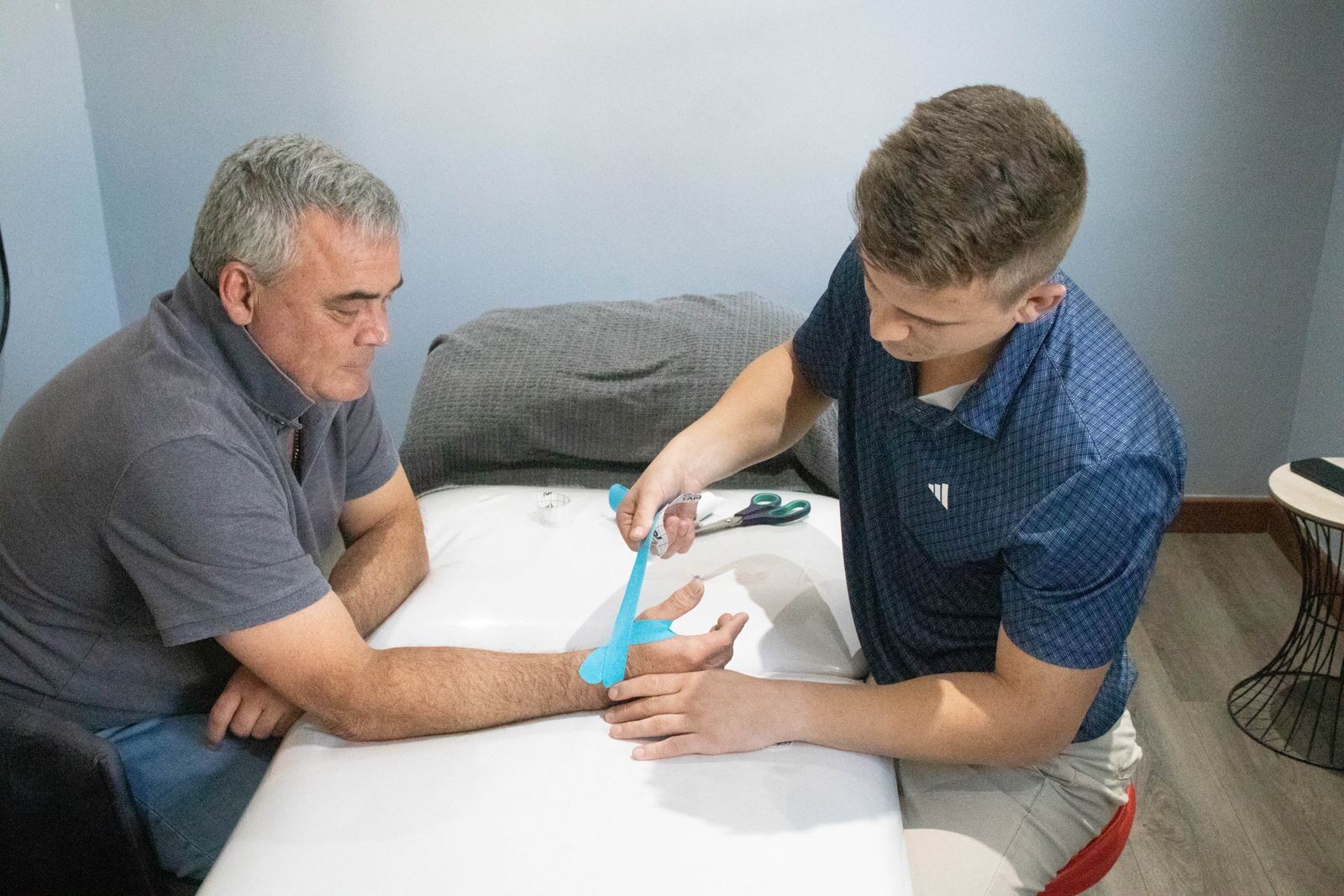
- Strapping and taping for short-term support during return to gripping or training activity
- Ultrasound used selectively to support tissue healing in tendon-related conditions, alongside active rehabilitation
- Ergonomic and load-management advice, particularly relevant for desk-based work and repetitive manual tasks
Recovery timelines vary and are always approximate, generally ranging from 4 to 12 weeks depending on the severity and type of condition. Milder sprains and strains often settle toward the shorter end of that range, while tendon-related conditions and more significant nerve involvement, such as carpal tunnel syndrome, can take longer, toward the higher end.
Related Conditions We Treat
Not sure this is the right fit? These related conditions might explain what you're experiencing more precisely: Elbow Pain, Shoulder Pain, Neck Pain.
Frequently Asked Questions
When should I see a physiotherapist for wrist or hand pain?
If pain persists beyond a few days, limits grip or daily tasks, or keeps recurring, a physiotherapy assessment can identify the cause and guide recovery.
Do I need an X-ray or scan for wrist pain?
Not usually as a first step. Clinical assessment identifies most wrist and hand conditions, with imaging reserved for cases where a fracture or more significant injury is suspected.
Can wrist and hand pain heal without rest?
Often yes. Complete rest isn't always necessary or helpful. Your assessment identifies which activities to modify and which exercises support recovery.
How long does recovery usually take?
It depends on the diagnosis, and estimates are always approximate, generally ranging from 4 to 12 weeks depending on the severity and type of condition. Milder sprains often settle toward the shorter end of that range, while tendon-related conditions and more significant nerve involvement can take longer.
Can physiotherapy help prevent wrist pain from coming back?
Yes. Addressing strength, load tolerance, and ergonomic factors significantly reduces recurrence risk, particularly for repetitive-strain presentations.
Is my hand tingling or numbness serious?
It's worth having assessed rather than ignored. Tingling or numbness, particularly at night or with typing, is a common carpal tunnel symptom that generally responds well to early treatment.
Can I keep typing or working with wrist pain?
Often yes, with modification. Activity breaks, ergonomic adjustment, and targeted exercise are usually more effective than stopping work entirely.
What's the difference between carpal tunnel syndrome and general wrist pain?
Carpal tunnel syndrome specifically involves nerve compression, typically causing tingling or numbness in the thumb, index, and middle fingers, distinct from general joint or tendon-related wrist pain.
Is wrist pain in new parents common?
Yes. De Quervain's tenosynovitis (thumb-side wrist pain) is common in new parents due to repetitive lifting and holding, and generally responds well to physiotherapy and activity modification.
Do you treat wrist injuries from gym training or racquet sports?
Yes. Wrist strains and overuse from gym training, padel, and tennis are common presentations, assessed and treated with the same structured approach.
Does medical aid cover wrist and hand physiotherapy?
Yes, we bill most South African medical aids directly. Get in touch and we'll confirm your specific plan's benefit.
Do I need a referral to see you for wrist or hand pain?
No. You can book directly with us. If your medical aid requires a referral for reimbursement, we'll help guide you through that.
Peak Physiotherapy · Mayville, Pretoria
Ready to get moving again?
Book an assessment and get a clear plan for wrist pain — no referral needed.