
Dry Needling
A precise, evidence-informed technique for releasing muscle tension and easing pain, offered at Peak Physiotherapy in Mayville, Pretoria.
- No referral needed
- Medical aid billed directly
- Full-hour assessment
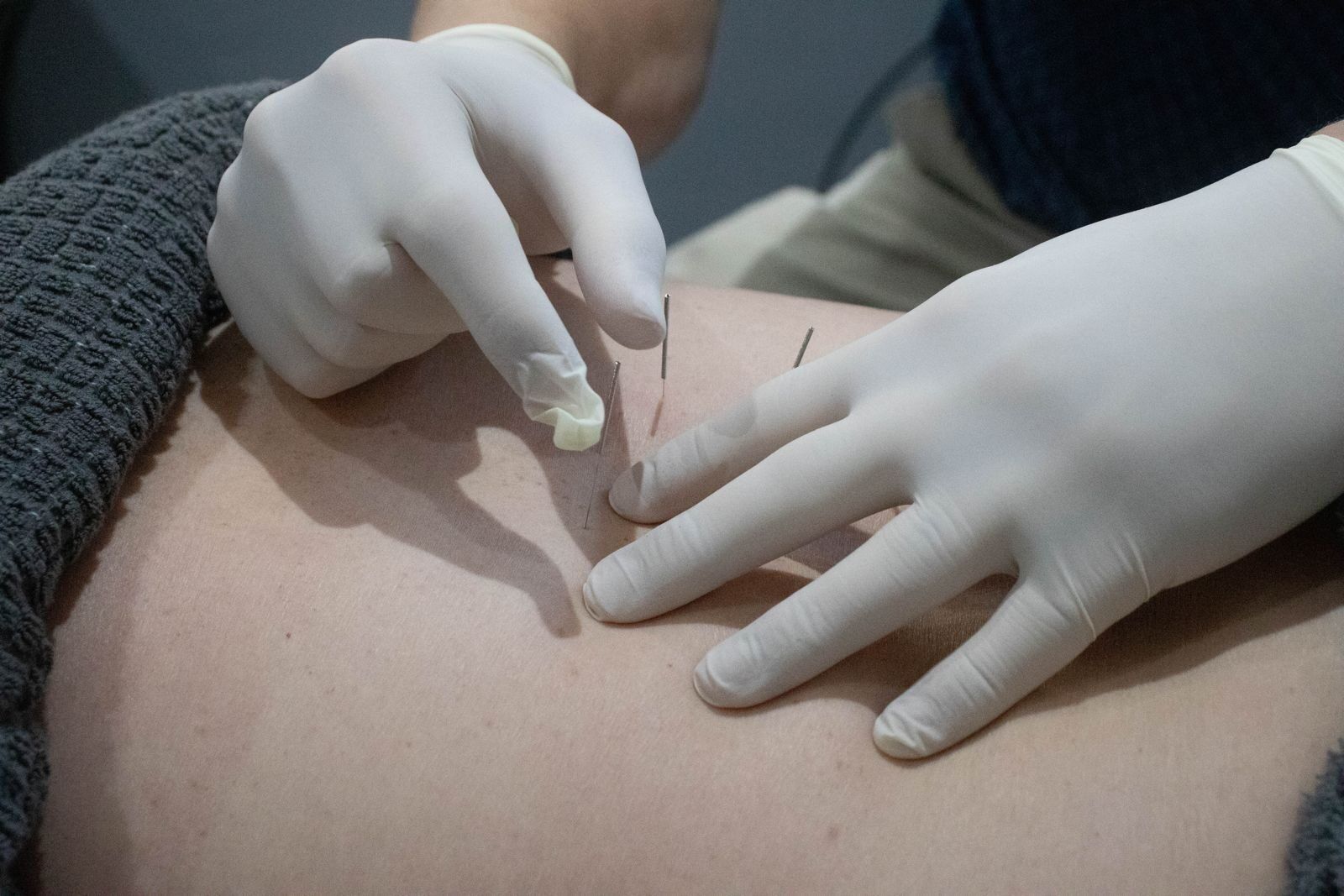
Introduction
Dry needling is a modern, evidence-based physiotherapy technique used to treat muscle pain, tightness, trigger points, and movement restriction. It involves inserting a very thin, sterile solid-filament needle, similar to an acupuncture needle but used within a Western musculoskeletal framework, into specific areas of muscle called myofascial trigger points. These are tight, sensitive knots within a muscle band that often cause pain locally or refer pain elsewhere in the body, and they're a common driver of persistent muscle tension, headaches, and chronic pain patterns.
Unlike an injection, no medication or fluid is introduced. The needle itself provides the therapeutic effect by stimulating the muscle fibre, connective tissue, and nervous system. Patients often feel a brief local twitch response as the needle contacts a trigger point, this is normal, expected, and part of how the technique works. Dry needling is sometimes also called intramuscular stimulation (IMS), trigger point dry needling, or muscle needling. The underlying principle is the same across these terms.
Dry needling has become one of the most widely used adjunct techniques in physiotherapy practice in South Africa and internationally, particularly for conditions where muscle tension, trigger points, and neuromuscular dysfunction contribute to pain. In Pretoria, it's used for everything from chronic neck pain and tension headaches to sports injuries, back pain and sciatica, and post-injury muscle guarding.
At Peak Physiotherapy in Mayville, dry needling is performed by James Muirhead Harris, who holds an ODNS (Optimal Dry Needling Solutions) Level 1 certification, a recognised training standard for physiotherapists practising dry needling in South Africa, accredited for continuing professional development (CPD) by the South African Society of Physiotherapy (SASP). It's included within your physiotherapy session as part of a broader assessment and treatment plan, rather than booked as an isolated standalone service. That matters clinically. Dry needling works best when it's targeted to specific findings from a full physical assessment, and paired with the exercise, mobility work, and load management that actually create lasting change.
Where Did Dry Needling Originate?
Dry needling developed from Western medical research into myofascial trigger points, first described in detail by Dr Janet Travell and Dr David Simons in the mid-20th century. Their work laid the foundation for understanding how dysfunctional muscle tissue can contribute to pain, weakness, and altered movement patterns.
Over time, physiotherapists refined dry needling into a clinically precise technique that fits within modern musculoskeletal rehabilitation. Today, it is used worldwide as part of an evidence-based physiotherapy treatment plan rather than a standalone therapy.
In South Africa, dry needling has been formalised through structured training pathways like the ODNS certification, which brings the technique into line with international best practice and integrates it within physiotherapy scope of practice rather than as a separate discipline.
Dry Needling vs Acupuncture
Although dry needling and acupuncture both use very thin needles, they are based on different philosophies and clinical goals. Dry needling is rooted in Western medicine, anatomy, and modern pain science. It targets specific muscles and neuromuscular structures identified during a detailed physical assessment.
Acupuncture, by contrast, originates from Traditional Chinese Medicine and focuses on influencing energy flow (Qi) along meridians. Dry needling is diagnosis-driven and movement-focused, making it particularly well suited to physiotherapy-based injury management and rehabilitation.
The differences show up most clearly in five areas:
Framework. Dry needling is rooted in Western anatomy, neuroscience, and pain science. Acupuncture is rooted in Traditional Chinese Medicine and the concept of Qi flow along meridians.
Assessment. Dry needling is diagnosis-led. Needles are placed based on a physical examination that identifies specific muscles, trigger points, or referred-pain patterns. Acupuncture point selection follows meridian mapping.
Practitioner. In South Africa, dry needling is performed by physiotherapists with specific training (like ODNS certification). Acupuncture is typically performed by acupuncturists registered under the Allied Health Professions Council of South Africa, or by medical doctors with acupuncture training.
Session context. Dry needling is almost always used within a broader physiotherapy session that includes assessment, exercise, and manual therapy. Acupuncture is more often a standalone treatment session.
Sensation. Both use similar needles, but dry needling deliberately elicits a local twitch response in the target muscle. Acupuncture typically doesn't.
Both approaches have their place. If you're looking for musculoskeletal rehabilitation, movement restoration, or return-to-sport work, dry needling within physiotherapy is the fit. If you're looking for whole-system acupuncture based on TCM principles, an acupuncturist is the appropriate referral.
How Dry Needling Works
Dry needling targets myofascial trigger points: small, hyperirritable bands within a muscle that stay contracted even when the rest of the muscle is relaxed. Inserting a thin needle directly into this band typically produces a local twitch response, a brief, involuntary contraction that's thought to help interrupt the abnormal muscle activity holding the trigger point in place.
This mechanical effect is combined with changes at the nervous system level: needling appears to influence local blood flow and alter how pain signals from that area are processed, contributing to reduced sensitivity and muscle tension in the hours and days that follow.
- The needle mechanically disrupts the tight muscle band at the trigger point
- A local twitch response often signals the trigger point has been accurately located
- Local blood flow and tissue chemistry are affected, supporting the muscle's return to a normal resting state
- Pain signalling from the area is modulated, contributing to reduced sensitivity
Evidence & Research Support
Research on dry needling has expanded substantially over the past 15 years, and the current evidence base supports its use as an adjunct within physiotherapy rehabilitation, particularly when combined with exercise and movement retraining, rather than used in isolation. Systematic reviews consistently find that dry needling can reduce pain and improve function in conditions like chronic neck pain, plantar heel pain, tension-type headache, shoulder pain, and lower back pain, especially in the short to medium term.
The clearest signal in the research is that dry needling works best as part of a broader treatment plan, not as a standalone therapy. Studies comparing dry needling alone to dry needling plus structured exercise consistently show that the combination outperforms either intervention on its own. This is why dry needling at Peak Physiotherapy is always applied within a full session that includes exercise prescription, manual therapy, and rehabilitation planning.
Individual response to dry needling varies. Some patients experience a marked reduction in muscle tension and pain sensitivity within one or two sessions, while others need several sessions before a clear response emerges. Some presentations respond very well to needling, and some don't respond much at all. That's normal, and it's part of why we assess after each session and adjust the treatment approach based on what your body is actually responding to, rather than pushing a fixed protocol.
Benefits of Dry Needling
When it's the right fit, dry needling offers several benefits within your broader treatment plan:
- Pain reduction: helps desensitise overactive muscles and reduce pain signalling
- Improved flexibility: allows tight or shortened muscles to relax more effectively
- Better movement: supports smoother, more efficient movement patterns
- Enhanced rehab: makes strengthening exercises more comfortable and effective
- Reduced protective muscle guarding: helping interrupt the pain-tension-avoidance-deconditioning cycle that keeps chronic muscle pain going
What to Expect During a Session
During a dry needling session, your physiotherapist will first assess your posture, movement, and muscle function to identify problem areas: the specific muscles that are tight, tender, or driving your pain. This assessment is what distinguishes physiotherapy dry needling from generic needle work: the needles go where the clinical findings point, not to a preset pattern.
Fine, sterile, single-use needles are then inserted into specific tight muscle bands. You may experience:
- A brief aching, cramping, or twitch response as the needle contacts a trigger point
- Temporary local soreness after the session, similar to post-exercise muscle soreness
- A sense of muscle release or reduced tension as the trigger point desensitises
- Occasionally, a light sensation of referred pain, pain that travels to another area, which can actually help confirm the correct muscle is being treated
These responses are normal and usually settle within 24–48 hours. Most patients are comfortable driving home afterwards and returning to normal activity, though we generally recommend avoiding heavy training on the same day. Dry needling is almost always combined with exercise therapy, movement retraining, and manual therapy within the session. The needling isn't the whole treatment, it's one tool.
A typical dry needling application takes 5–15 minutes within a broader physiotherapy session. The number of needles used varies. Sometimes one or two targeting a single problem area, sometimes more spread across several muscles depending on the presentation.
Conditions & Clinical Uses
Neck pain and tension-type headaches
are frequently linked to trigger points in the upper trapezius, levator scapulae, and suboccipitals, muscles that commonly refer pain into the head. Dry needling here is often combined with neck pain physiotherapy that addresses posture and movement patterns.
Shoulder pain and rotator cuff conditions
often involve trigger points in the rotator cuff, infraspinatus, and periscapular muscles as part of a shoulder pain presentation. Dry needling helps reduce guarding so strengthening exercises can progress more effectively.
Lower back pain and sciatica
often improve when the muscle contribution is addressed directly: needling the paraspinals, quadratus lumborum, gluteals, and piriformis reduces load on back pain and sciatica presentations, particularly where muscle tightness is compressing or irritating nearby nerves.
Hip, thigh, and gluteal muscle pain
frequently involves trigger points in the glute complex, TFL, and deep hip rotators, common contributors to hip pain and thigh pain, especially in runners, cyclists, and desk-bound patients.
Hamstring, calf, and Achilles-related tightness
is commonly needled in sports rehabilitation and running-related injury, where muscle tension can drive load transfer problems into tendons and joints.
Sports injuries and overuse syndromes
are frequently supported by dry needling as an adjunct within sports and rugby physiotherapy, used to accelerate the desensitisation of overloaded muscles so athletes can return to structured rehab and eventually training.
Post-operative and post-injury muscle stiffness
develops when muscles around a surgical site or an injured joint hold onto protective guarding after the primary issue has healed. Dry needling can help release that guarding as part of post-surgical rehabilitation.
Jaw pain, TMJ dysfunction, and clenching-related headaches
often involve trigger points in the masseter, temporalis, and pterygoid muscles as part of a TMJ presentation, and are safely and effectively treated with dry needling by an appropriately trained physiotherapist.
How Dry Needling Fits into Your Treatment Plan
Dry needling on its own doesn't fix underlying movement problems, strength deficits, or the loading habits that produced the muscle tension in the first place. That's why it's applied within a physiotherapy session that includes:
- A physical assessment to identify what's actually driving your symptoms
- Manual therapy techniques such as joint mobilisations or myofascial release where indicated
- Exercise prescription targeted to your specific findings and goals
- Movement retraining and load management guidance
- Education about what to expect and how to progress
Dry needling adds a specific tool for muscle-driven symptoms. The rest of the session addresses everything else.
Is This the Right Treatment for You?
The best way to know is a proper assessment, not guessing based on what you've read here.
Frequently Asked Questions
Does dry needling hurt?
Most patients describe brief, tolerable discomfort, a dull ache, a cramp, or a quick twitch, rather than sharp pain. It's very different from an injection, since the needle is solid and no fluid is introduced. Post-treatment soreness is usually mild and settles within a day or two, similar to how muscles feel after a hard workout.
Is dry needling safe?
Yes, when performed by a physiotherapist with formal dry needling training using sterile, single-use needles. Adverse events are uncommon and generally mild (small bruise, brief soreness). At Peak Physiotherapy, dry needling is performed with ODNS certification and full adherence to South African infection-control standards.
How is dry needling different from acupuncture?
Dry needling is grounded in Western musculoskeletal anatomy and pain science, and targets specific muscle trigger points identified through physical assessment. Acupuncture is based on Traditional Chinese Medicine and targets points along meridians. Same-looking needles, different clinical frameworks and different practitioners.
What does a dry needling session cost?
Dry needling isn't billed as a separate service, it's included within your standard physiotherapy session, so the cost is the same as any other physio consultation. If you're on medical aid, this is billed under standard physiotherapy codes.
Does medical aid cover dry needling in South Africa?
Because dry needling is included within your physiotherapy session, it's generally covered the same way physiotherapy is under most South African medical aids. We bill directly to the aid where possible. Check your specific plan's physiotherapy benefit for the detail.
How many sessions of dry needling will I need?
It depends on your condition, how long you've had it, and how well your body responds. Some presentations respond noticeably after 1-2 applications; chronic conditions often need it as part of ongoing sessions over several weeks. Your physiotherapist will assess response after each session and adjust the plan accordingly.
Can dry needling help with sciatica or lower back pain?
Yes, particularly when muscle tightness in the paraspinals, gluteals, or piriformis is contributing to nerve irritation. It's rarely the whole treatment, usually combined with joint mobilisation, neural mobilisations, and structured exercise, but it can meaningfully reduce muscle contribution to the pain.
What conditions is dry needling most useful for?
The strongest evidence is in chronic neck pain, tension-type headaches, shoulder pain, plantar heel pain, and lower back pain. It's also commonly used in sports rehabilitation, TMJ dysfunction, and post-injury muscle guarding. Your first-session assessment determines whether it's appropriate for your specific presentation.
Can I drive after a dry needling session?
Yes. Most patients drive home immediately afterwards without issue. Some experience mild post-treatment soreness or a brief feeling of muscle heaviness, but nothing that prevents normal daily function.
Should I exercise or train after dry needling?
Light movement is fine and often helps. Heavy training on the same day is best avoided, the muscle needs time to settle before being loaded aggressively. Your physiotherapist will guide you on what training to keep, modify, or skip based on your specific presentation.
What's the difference between dry needling and IMS (intramuscular stimulation)?
IMS is closely related to dry needling, both use solid-filament needles to treat muscle trigger points. The techniques overlap heavily, and terminology varies by training background: physiotherapists trained through ODNS typically use "dry needling," while those trained in the Gunn IMS system may use "IMS." The clinical application is very similar in most cases.
Are the needles reused?
No. All needles are sterile, single-use, and disposed of in a designated sharps container after each application, in line with South African infection control standards.
Is dry needling suitable for everyone?
Not always. Certain conditions (bleeding disorders, some medications, needle phobia, some pregnancies) mean dry needling isn't appropriate or needs modified application. Your physiotherapist will screen for these during your first assessment before including dry needling in your treatment plan.
Can dry needling help with tension headaches or migraines?
Dry needling has good evidence for tension-type headaches, particularly where trigger points in the upper trapezius, suboccipitals, and temporalis are contributing. Its role in true migraines is less clear, some patients respond well, others don't, and it's usually one component of a broader headache management plan rather than a standalone treatment.
Do you offer dry needling for sports injuries?
Yes. Dry needling is a frequent adjunct within our sports rehabilitation, particularly for muscle guarding around a joint injury, post-training tightness, and trigger points that develop under high training loads. It's one of the tools used within a structured sports physiotherapy plan.
Peak Physiotherapy · Mayville, Pretoria
Ready to get moving again?
Book an assessment and find out if dry needling is right for you — no referral needed.