Neural Mobilisations
Techniques to restore normal nerve movement and ease nerve-related pain, at Peak Physiotherapy in Mayville, Pretoria.
- No referral needed
- Medical aid billed directly
- Full-hour assessment
Introduction
Neural mobilisations (also called neurodynamics or nerve gliding techniques) are physiotherapy techniques used to improve the movement and health of the nervous system.
Your nerves are not fixed cables. They are designed to slide, glide, stretch, and adapt as you move. When a nerve becomes irritated, compressed, or sensitised, this normal movement can be reduced, leading to pain, pins-and-needles, burning sensations, or weakness.
Neural mobilisation techniques gently and progressively restore normal nerve movement by guiding the nerve through specific positions. The goal is not to stretch the nerve aggressively, but to improve its ability to tolerate movement and load again, often used alongside back pain treatment where sciatica is present, or for nerve-related wrist and hand symptoms.
At Peak Physiotherapy in Mayville, we offer neural mobilisation to patients from The Moot, Wonderboom, Les Marais, and Rietfontein, as well as further afield across Pretoria, as part of a broader assessment and treatment plan.
Where Did Neural Mobilisation Originate?
The idea that nerves themselves could be a source of pain and movement restriction, not just a pathway carrying signals from elsewhere, developed gradually through the 20th century. Early foundational work came from researchers like Alf Breig, who studied the functional anatomy of nerve movement, and Gregory Grieve, whose 1970 paper is often credited as the first peer-reviewed publication specifically addressing this area.
The modern clinical approach was substantially developed and systematised by physiotherapists David Butler and Michael Shacklock through the late 1980s to mid-2000s. Butler's 1991 book, Mobilisation of the Nervous System, and Shacklock's 2005 text, Clinical Neurodynamics, remain foundational texts in how neurodynamics is taught and practised internationally today.
The specific distinction between "slider" and "tensioner" techniques, covered in more detail below, was formally analysed in research published by Michel Coppieters and David Butler in 2007, refining understanding of how these different movement patterns affect the nerve differently.
How Neural Mobilisation Works
Nerves are designed to tolerate movement, gliding smoothly relative to the surrounding tissue as you move your body through everyday activities. When a nerve becomes irritated, whether from compression, inflammation, or reduced movement following injury or surgery, it can become mechanically sensitive, meaning normal movement starts to provoke symptoms that wouldn't previously have caused any issue.
Neural mobilisation works by carefully and progressively reintroducing movement to the nerve and its surrounding structures, gradually improving its tolerance to mechanical load rather than trying to force a quick change.
- Gentle, repeated movement encourages normal nerve gliding relative to surrounding tissue
- Gradual exposure to movement is thought to reduce the nerve's mechanical sensitivity over time
- Nearby structures, such as muscles and joints the nerve passes through, are often addressed alongside the nerve itself
- Progression is closely monitored, since nerve tissue responds poorly to being moved too aggressively
Types of Neural Mobilisation Techniques
Neural mobilisation techniques fall into two broad categories, and the choice between them depends on your specific presentation and how sensitive the nerve currently is.
Sliders (gliding techniques) move the nerve relative to surrounding tissue without significantly increasing overall tension on the nerve. One end of the nerve pathway is lengthened while the other is shortened, creating a gliding motion. Sliders are generally gentler and often used earlier in treatment, or when a nerve is particularly irritable.
Tensioners apply a more direct stretch to the nerve by lengthening the nerve pathway at both ends simultaneously. This creates more tension through the nerve itself, and is generally introduced later in treatment, once the nerve tolerates movement well and a more direct loading approach is appropriate.
Your physiotherapist selects which approach, and how progressively to apply it, based on your assessment, not a fixed protocol applied to everyone.
Evidence & Research Support
Research on neural mobilisation generally supports its use for conditions involving nerve mechanosensitivity, such as cervical radiculopathy and sciatic nerve irritation, particularly when combined with broader exercise-based rehabilitation rather than used alone.
Systematic reviews have found that neural mobilisation can contribute to reduced pain and improved function in conditions like carpal tunnel syndrome and lumbar radiculopathy with sciatica, though study quality and technique application vary considerably across the research, making it difficult to draw firm conclusions about the size of the effect for any single condition.
As with other manual techniques, individual response varies significantly. Some patients notice a clear reduction in nerve-related symptoms within a few sessions; others need a longer, more gradual course. This is part of why neural mobilisation is applied as one component of a broader treatment plan, adjusted based on how your specific presentation responds, rather than a fixed course applied identically to everyone.
Benefits in Physiotherapy
When appropriate for your presentation, neural mobilisation offers several benefits within your broader treatment plan:
- Reduction of nerve-related pain: helps calm irritated nerves contributing to burning, shooting, or sharp pain
- Improved mobility and flexibility: restores normal nerve movement during daily and sporting activities
- Reduced pins-and-needles or numbness: improves nerve tolerance to different postures
- Better movement confidence: helps patients move without fear of triggering shooting symptoms
- Improved function: allows better participation in strengthening and exercise programmes
What to Expect During a Session
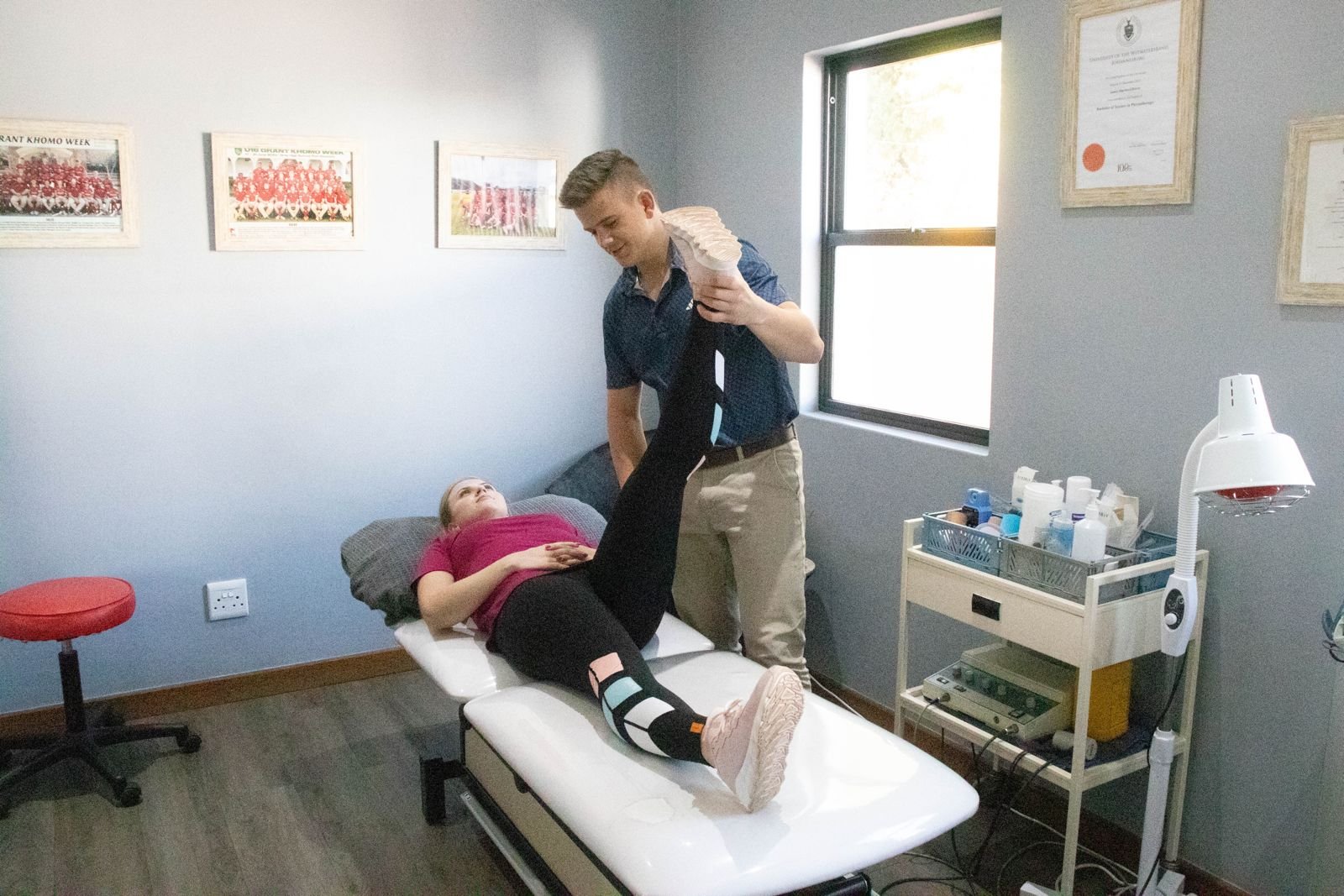
Neural mobilisation is applied as part of your broader physiotherapy session, following an assessment that identifies whether nerve irritation is genuinely contributing to your symptoms.
- Your physiotherapist will guide your limb or body through specific positions and movements designed to glide or tension the affected nerve
- You may feel mild symptom reproduction, such as tingling or a pulling sensation, which should stay controlled and tolerable throughout
- Movement is applied gently and progressively, never forced, and adjusted based on your response
- You'll often be given specific nerve-gliding exercises to continue safely at home between sessions
Conditions & Clinical Uses
Your physiotherapist in Pretoria, The Moot, or Mayville will always assess whether nerve-related symptoms are contributing to your pain. Common uses include:
Sciatic nerve irritation and sciatica
is a frequent application alongside back pain treatment, where nerve gliding helps restore normal sciatic nerve movement.
Cervical or lumbar radiculopathy
(nerve root pain) is nerve-related pain originating from the spine, often accompanying neck or back presentations.
Carpal tunnel syndrome
often responds to nerve gliding as a core technique for median nerve-related wrist and hand symptoms.
Cubital tunnel syndrome
(elbow) involves nerve-related elbow symptoms affecting the ulnar nerve.
Thoracic outlet-related symptoms
involve nerve irritation affecting the arm, sometimes linked to neck and shoulder posture.
Thigh nerve irritation (meralgia paresthetica)
causes burning or numbness on the outer thigh from irritation of a specific sensory nerve, and can respond to gentle neural mobilisation alongside thigh pain assessment.
Post-surgical nerve sensitivity
often benefits from neural mobilisation supporting nerve tolerance as part of broader post-surgical rehabilitation.
Sports-related nerve entrapments
are relevant across sports and rugby presentations involving nerve irritation.
How Neural Mobilisation Fits into Your Treatment Plan
Neural mobilisation on its own doesn't address the underlying cause of nerve irritation, whether that's a disc, a tight muscle, or reduced movement following surgery. That's why it's applied within a physiotherapy session that includes:
- A physical assessment to confirm whether nerve irritation is genuinely contributing to your symptoms
- Treatment of the underlying cause, such as joint mobilisations or dry needling where relevant
- Exercise prescription to build strength and control around the affected area
- Home nerve-gliding exercises to support progress between sessions
Neural mobilisation adds a specific tool for nerve-related symptoms. The rest of the session addresses everything else.
Is This the Right Treatment for You?
The best way to know is a proper assessment, not guessing based on what you've read here.
Frequently Asked Questions
Is neural mobilisation painful?
No. It should feel controlled and tolerable. While mild symptom reproduction can occur during the glide, treatment should never aggressively worsen your pain.
How is this different from stretching?
Stretching focuses on muscle length. Neural mobilisation focuses on nerve movement and tolerance. Stretching a nerve aggressively can actually worsen symptoms; gliding is much more gentle and controlled.
What's the difference between a slider and a tensioner technique?
Sliders move the nerve relative to surrounding tissue without significantly increasing tension, generally gentler and used earlier in treatment. Tensioners apply a more direct stretch to the nerve itself, generally introduced later once the nerve tolerates movement well.
Can it help sciatica?
Yes, in many cases. When sciatica involves nerve irritation rather than serious pathology, nerve gliding can be a valuable part of a rehab plan to restore movement.
Can neural mobilisation help sciatica caused by a disc bulge?
It can help manage the nerve-related symptoms, such as leg pain and tingling, as part of a broader treatment plan that also addresses the disc and surrounding tissue. It doesn't change the disc itself, but often meaningfully improves how the nerve tolerates movement.
Will I be given exercises to do at home?
Often yes. Gentle nerve-gliding exercises may be prescribed to support your recovery between sessions at our Mayville practice.
What does nerve irritation actually feel like?
Common descriptions include burning, shooting, or electric-type pain, tingling or pins-and-needles, and sometimes numbness or weakness, distinct from general muscular aching or stiffness.
Can neural mobilisation help carpal tunnel syndrome without surgery?
It can be a useful part of conservative management for milder carpal tunnel presentations, alongside other treatment. More significant nerve compression may need further medical assessment, your physiotherapist will guide you on this.
Is neural mobilisation safe if I have numbness?
Numbness should always be properly assessed before treatment. Your physiotherapist will screen for this and determine whether neural mobilisation is appropriate for your specific presentation.
How long before nerve-related symptoms improve?
This varies considerably depending on the underlying cause and how long symptoms have been present. Some respond within a few weeks, others need a longer, more gradual approach.
Can I do nerve gliding exercises wrong and make things worse?
Nerve tissue is sensitive to being moved too aggressively, which is why home exercises are specifically dosed and clearly explained. Follow the guidance given rather than improvising or pushing through increasing symptoms.
Is this the same as what's sometimes called "nerve flossing"?
Yes. "Nerve flossing" is a common informal term for the same neural mobilisation and gliding techniques.
Does medical aid cover neural mobilisation treatment?
Yes, it's included within your physiotherapy session and billed the same way. We bill most South African medical aids directly.
Do I need a referral for neural mobilisation?
No. It's included as part of your physiotherapy session, which doesn't require a referral to book.
Peak Physiotherapy · Mayville, Pretoria
Ready to get moving again?
Book an assessment and find out if neural mobilisations is right for you — no referral needed.