
Mid-Back Physiotherapy
Assessment and treatment for mid-back pain, stiffness, and posture-related discomfort in Mayville, Pretoria — restoring easy, confident movement.
- No referral needed
- Medical aid billed directly
- Full-hour assessment
Introduction
Mid back pain, often felt between the shoulder blades or along the spine, is a very common but frequently overlooked source of discomfort. It can affect everyday activities such as sitting at a desk, driving, exercising, or even breathing deeply. Mid back pain is also known as thoracic pain, rib pain, or costovertebral joint pain, depending on the specific structures involved, and the label matters less than understanding what's driving the stiffness or discomfort.
Research suggests that around 30–40% of adults experience thoracic (mid back) pain at some point, particularly those who spend long hours sitting or working in sustained positions. While mid back pain can feel restrictive and frustrating, it is rarely serious and is usually related to stiffness, movement habits, or accumulated strain over time.
The reassuring news is that physiotherapy is highly effective in restoring movement, easing discomfort, and helping you return to normal daily life with confidence. At Peak Physiotherapy in Mayville, we treat mid back and rib-related pain in patients from The Moot, Wonderboom, Les Marais, and Rietfontein, as well as further afield across Pretoria. A full-hour first assessment helps distinguish thoracic-driven pain from related neck or shoulder presentations, which often overlap.
Anatomy & Biomechanics
The mid back, known as the thoracic spine, sits between the neck and lower back and plays a vital role in posture, breathing, and upper-body movement. This region is designed to provide stability while still allowing controlled motion, particularly rotation and extension.
Because the thoracic spine is naturally stiffer than the neck or lower back, it can become problematic when movement is reduced further, often through prolonged sitting, slouched posture, or limited variation in daily movement. When this area stiffens, the neck and shoulders frequently compensate, which can contribute to ongoing discomfort in those areas too.
Understanding this matters because many patients arrive worried that persistent stiffness means something is structurally wrong with the spine. In most cases, this isn't true. The thoracic spine is naturally built to be stiffer than the neck or lower back, and what feels "locked" usually reflects reduced movement variety rather than damage. With the right mobility and strengthening work, this area responds well and relatively quickly.
- Thoracic vertebrae (T1–T12) – the twelve vertebrae forming the middle portion of the spine, each connected to a pair of ribs
- Ribs and rib joints – connecting the spine to the rib cage, assisting with breathing and adding natural stiffness to this region
- Facet joints and discs – small joints and cushioning discs that guide smooth, controlled spinal movement
- Muscles between the shoulder blades – including the rhomboids and mid-trapezius, supporting posture and arm function
- Nerves – exiting between each thoracic vertebra, occasionally contributing to referred pain around the ribs or chest wall
What Causes Mid Back Pain (Acute vs Chronic)
Mid back pain may develop suddenly or build up gradually, and most cases are not linked to a single injury.
Acute mid back pain can follow lifting or carrying something heavy or awkward, sudden twisting or reaching movements, sports-related strain, or sleeping in an unusual or sustained position. These episodes can feel sharp and restrictive, particularly with breathing, but they usually reflect temporary joint or muscle irritation rather than serious injury.
Chronic mid back pain is more often related to repeated low-level stress, such as prolonged desk or computer work, sustained slouched or rounded posture, repetitive upper-body tasks, or reduced thoracic movement following neck or shoulder pain. Over time, reduced movement variety in this region can make it feel increasingly stiff and sensitive, even without any single clear trigger.
- Mid back pain is very common
- There is often no single clear cause
- Pain usually reflects stiffness or sensitivity, not damage
- The tissues here are strong, adaptable, and respond well to rehabilitation
Common Symptoms
Mid back pain is often described as stiff, tight, or achy rather than sharp, and symptoms can vary depending on whether the joints, muscles, or ribs are more involved. Some people notice it mainly first thing in the morning, while others find it builds up through a long day at a desk. Common symptoms include:
- A dull ache or tightness between the shoulder blades
- Stiffness after sitting or first thing in the morning
- Discomfort with twisting, reaching, or extending the upper body
- A feeling of the back being "locked" or hard to straighten
- Symptoms aggravated by prolonged sitting or poor posture
- Discomfort with deep breathing, coughing, or sneezing
- A dull ache that spreads toward the ribs or side of the chest
Many people notice improvement with gentle movement or position changes, which is a good sign that the area simply needs better load management and mobility.
How This Affects Your Day-to-Day
Mid back pain rarely stays contained to just that area. It can quietly limit some of the most ordinary daily movements.
- Struggling to twist and check your blind spot while driving or reversing
- Feeling stiff and unable to sit comfortably through a full workday
- Wincing with a deep breath, a cough, or a sneeze
- Avoiding reaching overhead for a shelf or stretching during a workout
For many people, it's not just the pain itself, but the constant awareness of a "locked" back that wears them down.
Why It Might Not Be Improving
A few patterns commonly keep mid back pain lingering longer than it needs to:
- Staying in the same fixed posture for hours without regular movement breaks.
- Avoiding movement out of fear of causing more damage. Understandable, but this tends to increase stiffness rather than protect the back.
- Managing only the symptom, such as heat or occasional stretching, without addressing the underlying movement pattern that's driving the stiffness.
- Not having a clear diagnosis yet. Without knowing whether it's joint, muscle, or rib-related, it's hard to know what actually needs to change.
- Never adjusting the desk setup or posture habits that keep loading the same tissues the same way.
The Solution: Getting the Right Diagnosis
Understanding exactly which pattern is driving your mid back pain, rather than guessing, is the most reliable way to get lasting relief.
Common Diagnoses
Many different labels are used for mid back pain. While diagnoses can be helpful, they don't always predict pain levels or recovery, and imaging findings often do not match symptoms closely.
Thoracic joint dysfunction
describes stiffness or irritation of the spinal joints in the mid back. This is the most common presentation, often responding well to joint mobilisation and movement work.
Thoracic muscle strain
is overload of the muscles between the shoulder blades, often linked to prolonged desk work or an unaccustomed activity.
Costovertebral joint irritation
involves the rib-to-spine joints, sometimes linked to breathing or a specific twisting movement. It can feel sharp with deep breaths or certain positions.
Postural-related thoracic pain
is discomfort from sustained positions, especially prolonged desk or screen-based work. Very common and highly responsive to movement and postural strengthening.
Thoracic disc irritation
is far less common than in the lower back and usually not serious, though it warrants proper assessment if present.
How Physiotherapy Can Help
Physiotherapy for mid back pain starts with a thorough assessment of your posture, movement, and daily demands, particularly desk setup and sitting habits, which are frequent contributors. Treatment typically includes:
- Joint mobilisations to restore movement in stiff thoracic segments, often the most directly effective technique for this region
- Therapeutic exercise to build thoracic mobility and postural muscle endurance
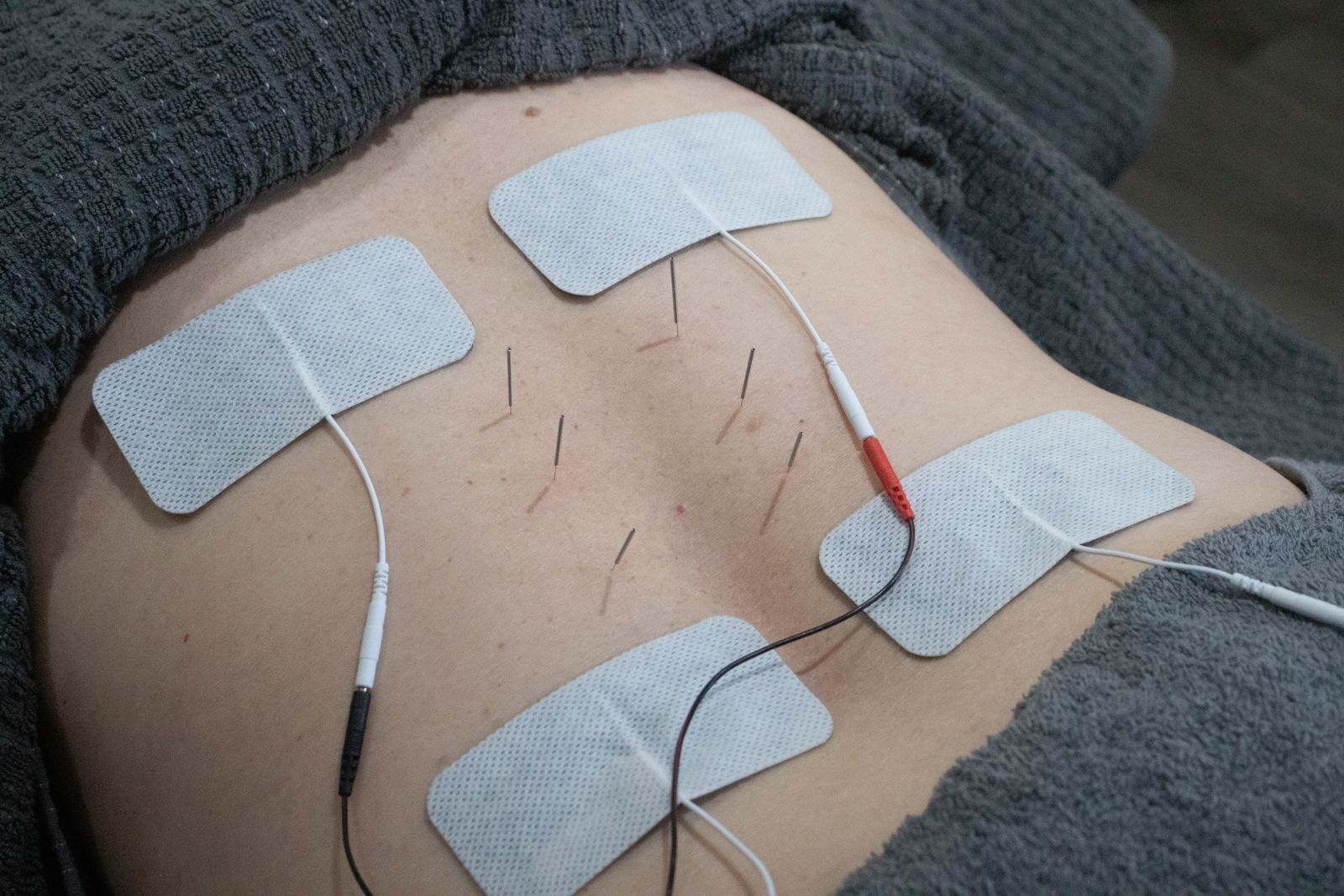
- Dry needling for tight muscles between the shoulder blades contributing to pain
- Myofascial release for broader soft-tissue tension in the upper back
- Electrotherapy used selectively for pain relief in more diffuse or acute presentations, alongside active treatment
- Practical desk setup and movement-break guidance, genuinely effective for prevention given how much mid-back pain is postural in origin
Most mid back pain improves well with a structured approach, and recovery estimates are always approximate, generally ranging from 4 to 12 weeks depending on the severity and how consistently the underlying stiffness or postural habits are addressed. Milder, postural presentations often settle toward the shorter end of that range. We regularly treat patients from The Moot, Mayville, and surrounding Pretoria areas for mid back and rib-related pain.
Related Conditions We Treat
Not sure this is the right fit? These related conditions might explain what you're experiencing more precisely: Back & Sciatica Pain, Neck Pain, Shoulder Pain.
Frequently Asked Questions
Is mid back pain serious?
Rarely. Most mid back pain is related to stiffness, posture, or movement habits rather than anything structurally serious, and responds well to physiotherapy.
Do I need an X-ray or MRI for mid back pain?
Not usually. Clinical assessment is generally more useful for guiding treatment, and imaging is reserved for cases where something more significant is suspected.
How long does mid back pain take to improve?
Recovery is always approximate, generally ranging from 4 to 12 weeks depending on the severity and how consistently the underlying stiffness or postural habits are addressed. Milder, postural presentations often settle toward the shorter end of that range.
Can poor posture cause mid back pain?
Sustained postures, particularly prolonged desk or screen work without movement breaks, are a common contributor, though it's usually a combination of posture, thoracic stiffness, and movement variety rather than posture alone.
Can physiotherapy help recurring mid back pain?
Yes. Addressing the underlying stiffness, postural habits, and movement patterns significantly reduces the likelihood of pain recurring.
Why does my mid back hurt when I breathe deeply?
This can point to costovertebral (rib-to-spine) joint irritation, which is generally not serious but is worth having properly assessed to confirm the source.
Is mid back pain connected to neck or shoulder pain?
Often, yes. The thoracic spine, neck, and shoulders work together, and stiffness or compensation in one area frequently contributes to symptoms in another.
Can exercise or gym training help mid back pain?
Yes, generally. Targeted mobility and strengthening work is one of the most effective long-term approaches, though your assessment will guide which specific movements to prioritise.
Is it normal for my mid back to feel "locked" or stuck?
Yes, this is a common description of thoracic stiffness and usually reflects reduced movement variety rather than anything more serious. It typically responds well to mobilisation and movement-based treatment.
Should I change my desk setup if I have mid back pain?
It can help, particularly alongside movement breaks throughout the day. We'll discuss practical adjustments as part of your treatment plan if desk work is a contributing factor.
Does medical aid cover mid back pain physiotherapy?
Yes, we bill most South African medical aids directly. Get in touch and we'll confirm your specific plan's benefit.
Do I need a referral to see you for mid back pain?
No. You can book directly with us. If your medical aid requires a referral for reimbursement, we'll help guide you through that.
Peak Physiotherapy · Mayville, Pretoria
Ready to get moving again?
Book an assessment and get a clear plan for mid-back pain — no referral needed.