
Post-Surgical Rehabilitation
Guided recovery after orthopaedic surgery in Mayville, Pretoria — helping you rebuild strength, range, and confidence at each stage of healing.
- No referral needed
- Medical aid billed directly
- Full-hour assessment
Introduction
Every post-surgical patient asks some version of the same two questions: will I get full function back, and am I doing too much or too little right now? Recovery from surgery isn't a straight line, and without proper guidance it's easy to either hold back too long or push too hard at the wrong stage. A structured rehabilitation plan, built around your specific procedure, your surgeon's protocol, and your actual healing timeline, takes the guesswork out of that.
At Peak Physiotherapy we work with patients through every stage of post-surgical recovery, from the earliest movement after an operation through to a full return to sport, work, or day-to-day activity. We follow your surgeon's protocol closely, coordinate with your care team where helpful, and progress you at a pace that matches how your body is healing, not a generic timeline.
Our Mayville practice is just minutes from Life Eugene Marais Hospital, making it a convenient option if you're recovering from surgery there or at another nearby facility, no long drive across Pretoria for appointments during the weeks when getting around is hardest.
Surgeries We Commonly Help With
We support recovery after a wide range of orthopaedic procedures, working from your surgeon's specific protocol rather than a generic approach for each type of surgery. Whether you're a few days post-op or several months into your recovery, the assessment adapts to exactly where you are in the healing process. If your specific operation isn't listed below, get in touch. Most orthopaedic recoveries follow similar principles, and we can build a plan around your surgeon's protocol regardless of the exact procedure.
- Knee: ACL reconstruction, meniscus repair, total or partial knee replacement, and arthroscopy, see knee pain for more on knee-specific rehabilitation
- Hip: hip replacement, hip arthroscopy, and labral repair, see hip pain
- Shoulder: rotator cuff repair, labral repair, and shoulder replacement, see shoulder pain
- Ankle and foot: ligament reconstruction and fracture fixation, see ankle pain
- Spine: microdiscectomy and spinal fusion, always in close coordination with your surgeon, see back pain
- General orthopaedic and fracture rehabilitation, including procedures not listed above
What Recovery Generally Looks Like, Stage by Stage
Recovery from orthopaedic surgery is rarely a straight line. It's normal to have good days and setbacks, plateaus where progress feels slow, and moments where you're not sure if what you're feeling is expected or a sign something's wrong. Understanding the general stages of recovery, while always deferring to your surgeon's specific protocol, helps make sense of where you are in the process.
Every surgery and every patient is different, and your surgeon's protocol always takes priority over any general timeline. That said, most orthopaedic recoveries move through broadly similar stages, and knowing what to expect at each one helps take the uncertainty out of the process:
- Early stage (typically the first few weeks): protecting the surgical site, managing swelling and pain, restoring gentle range of motion, and beginning light, protocol-guided movement without overloading healing tissue
- Mid stage (typically weeks to a few months): progressive strengthening, restoring normal movement patterns, rebuilding neuromuscular control, and gradually increasing the demands placed on the healing tissue
- Late stage (timing varies significantly by procedure, often several months for more significant surgeries like ACL reconstruction or joint replacement): work-specific or sport-specific loading, functional testing, and a structured, criteria-based return to your normal activity, not a return based on the calendar alone
Common Concerns During Recovery
Beyond the physical side, most patients are working through a similar set of worries: when they can drive again, when they can return to work, whether they're progressing "normally," and whether pushing through discomfort is helping or hurting. Part of a proper post-surgical assessment is talking through these honestly, with realistic expectations for your specific procedure rather than generic reassurance.
It's also worth knowing what's not a normal part of recovery, since not every ache or change is something to just push through. Your surgeon and surgical team remain the right point of contact for anything related to the surgery itself, but a few signs are worth mentioning at your physiotherapy check-ins, or contacting your surgeon about directly if they appear:
- Increasing redness, warmth, or discharge at the incision site
- A fever, or feeling generally unwell beyond the expected post-op fatigue
- A sudden, significant increase in swelling or pain, rather than the gradual improvement expected
- Calf pain, swelling, or warmth in the leg, particularly after lower-limb surgery
- Numbness, tingling, or colour changes beyond what your surgeon has described as expected
These are uncommon, but knowing what to watch for means you can raise it early rather than wonder. Your physiotherapy sessions are a good place to flag anything that feels off, and we'll help direct you to your surgeon promptly if needed.
How We Approach Post-Surgical Rehab
Post-surgical rehabilitation is different from other physiotherapy. It has to respect the healing tissue while still progressing you steadily toward normal function. Doing too little slows recovery. Doing too much risks setbacks. Getting the balance right is what a structured plan is for.
- Assessment against your surgeon's protocol and current healing stage
- Progression based on how your tissue is actually healing and responding, not a fixed calendar
- Ongoing communication with your surgeon or referring doctor when needed
- Clear milestones so you know what "on track" looks like at each check-in
Treatment draws on therapeutic exercise to rebuild strength and control at a pace matched to your healing stage, joint mobilisations where stiffness needs addressing without overloading the surgical site, movement analysis for functional and return-to-sport testing once you're approaching that stage, and lymphatic drainage where post-surgical swelling needs targeted support, particularly in the earlier stages of recovery.
What to Expect
Your first appointment includes a full assessment: reviewing your surgical notes and protocol, checking range of motion and strength, identifying any compensations that have crept in, and setting realistic milestones for your recovery timeline. From there we build a plan and start you moving safely.
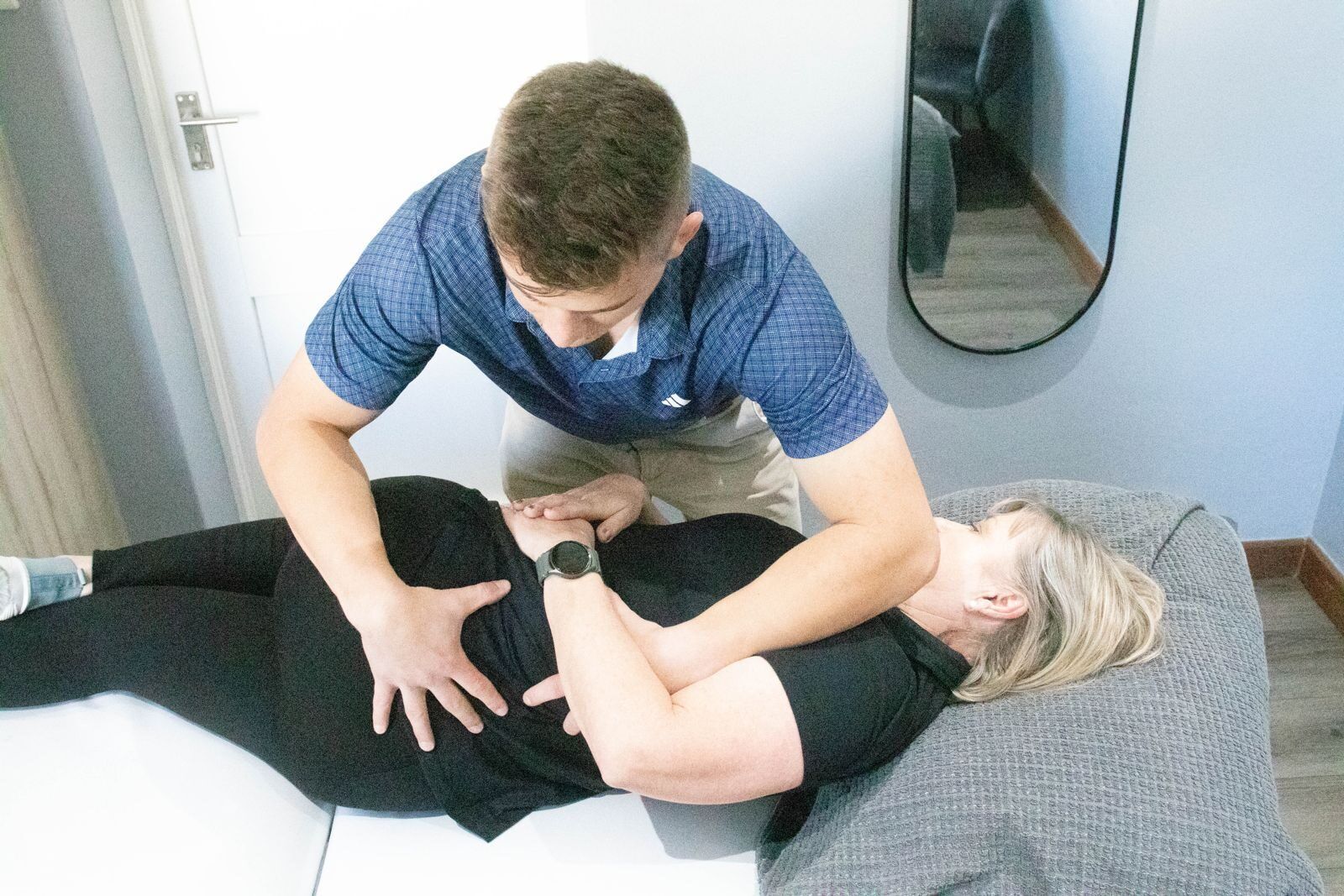
Sessions combine hands-on treatment (mobilisation, soft tissue work, strapping or taping where useful) with guided rehabilitation exercises. You'll leave each session with a clear home programme so you're progressing between visits, not just during them.
As you progress, sessions evolve to match your healing stage, more mobility-focused early on, shifting toward strength and functional loading as tissue healing allows. We'll keep in touch with your surgeon where useful, particularly around key milestones like weight-bearing changes or clearance for more demanding activity, so your rehabilitation and your surgical follow-up stay aligned.
Related Conditions We Treat
Not sure this is the right fit? These related conditions might explain what you're experiencing more precisely: Knee Pain, Hip Pain, Shoulder Pain, Ankle Pain, Back & Sciatica Pain.
Frequently Asked Questions
Do I need a referral from my surgeon to start physiotherapy?
No. You can book directly, though we'll always want sight of your surgical notes or protocol where available, and we're happy to coordinate directly with your surgeon if needed.
How soon after surgery should I start physiotherapy?
This depends entirely on your surgeon's protocol for your specific procedure. Some post-surgical rehab starts within days, others wait longer. We'll follow your surgeon's guidance closely.
I had my surgery somewhere other than Life Eugene Marais — can I still come to you?
Yes. We work with patients regardless of where their surgery took place, following your surgeon's protocol.
When can I drive again after surgery?
This varies significantly by procedure and side of surgery, and is ultimately your surgeon's call. We can discuss general guidance during your assessment, but always defer to your surgeon's specific instruction.
When can I return to work?
Depends heavily on your procedure and the physical demands of your job. We'll discuss a realistic timeline based on your specific situation and progress.
How many sessions will I need?
This varies significantly by procedure. A straightforward arthroscopy needs far fewer sessions than an ACL reconstruction or joint replacement. We'll give you a realistic estimate once we understand your specific surgery and protocol.
Will medical aid cover post-surgical physiotherapy?
Yes, we bill most South African medical aids directly. Get in touch and we'll confirm your specific plan's benefit.
What if I'm doing too much too soon and don't realise it?
This is exactly what regular physiotherapy check-ins are for. Monitoring your progress against expected healing stages and adjusting your programme if you're either under- or over-doing it.
Can physiotherapy help with swelling after surgery?
Yes. Techniques like lymphatic drainage and guided movement can help manage post-surgical swelling as part of your broader recovery plan.
Do you coordinate directly with my surgeon?
Yes, where helpful. We can communicate with your surgeon or referring doctor about your progress, particularly for more complex procedures like ACL reconstruction or joint replacement.
How is post-surgical rehab different from regular physiotherapy?
It follows your surgeon's specific protocol and healing timeline rather than a general treatment approach. Progression has to respect what stage of tissue healing you're actually at, not just how you're feeling.
What happens if my recovery isn't progressing as expected?
We'll flag this early and, where appropriate, communicate with your surgeon. Post-surgical rehab isn't a fixed programme, it's adjusted based on how you're actually responding.
Can I do my post-surgical rehab exercises at home, or do I need to come in for every session?
Most programmes combine in-clinic sessions with a home exercise programme. You'll leave each visit with clear guidance on what to do between appointments, not just during them.
Peak Physiotherapy · Mayville, Pretoria
Ready to get moving again?
Book an assessment and get a clear plan for post-surgical rehab — no referral needed.