
Electrotherapy
Targeted electrical modalities to manage pain and support tissue healing, offered at Peak Physiotherapy in Mayville, Pretoria.
- No referral needed
- Medical aid billed directly
- Full-hour assessment
Introduction
Electrotherapy is a group of physiotherapy treatments that use safe, controlled electrical currents to stimulate nerves or muscles for therapeutic benefit. It has been used in medical rehabilitation for decades and remains a valuable tool when applied correctly and combined with hands-on treatment and exercise. Electrotherapy covers several distinct techniques, including TENS, EMS, and interferential therapy (IFT), each working through a different mechanism and suited to different presentations.
In modern physiotherapy practices across Pretoria, The Moot, and Mayville, electrotherapy is commonly used to reduce pain, improve muscle activation, and support recovery after injury or surgery.
Rather than being a "passive fix," electrotherapy is best seen as a supportive modality, helping calm symptoms or improve muscle function so that active rehabilitation can be more effective. It's included within your physiotherapy session where your assessment identifies it as genuinely useful, not applied as a default part of every visit.
Where Did Electrotherapy Originate?
The therapeutic use of electrical current dates back further than most people expect, with early experiments in electrical stimulation for pain and muscle function recorded as far back as the 18th and 19th centuries. Modern electrotherapy as used in physiotherapy today developed through the 20th century, as researchers refined the understanding of how different electrical frequencies and waveforms affect nerves and muscle tissue.
TENS emerged from pain-science research in the 1960s and 70s, building on the discovery that stimulating certain nerve fibres could reduce the perception of pain. EMS and interferential therapy developed alongside advances in rehabilitation medicine, particularly for supporting muscle function after surgery or injury where voluntary muscle activation was difficult.
Today, all three techniques are well-established, widely used tools within physiotherapy practice internationally, applied selectively rather than as a default treatment for every patient.
How Electrotherapy Works
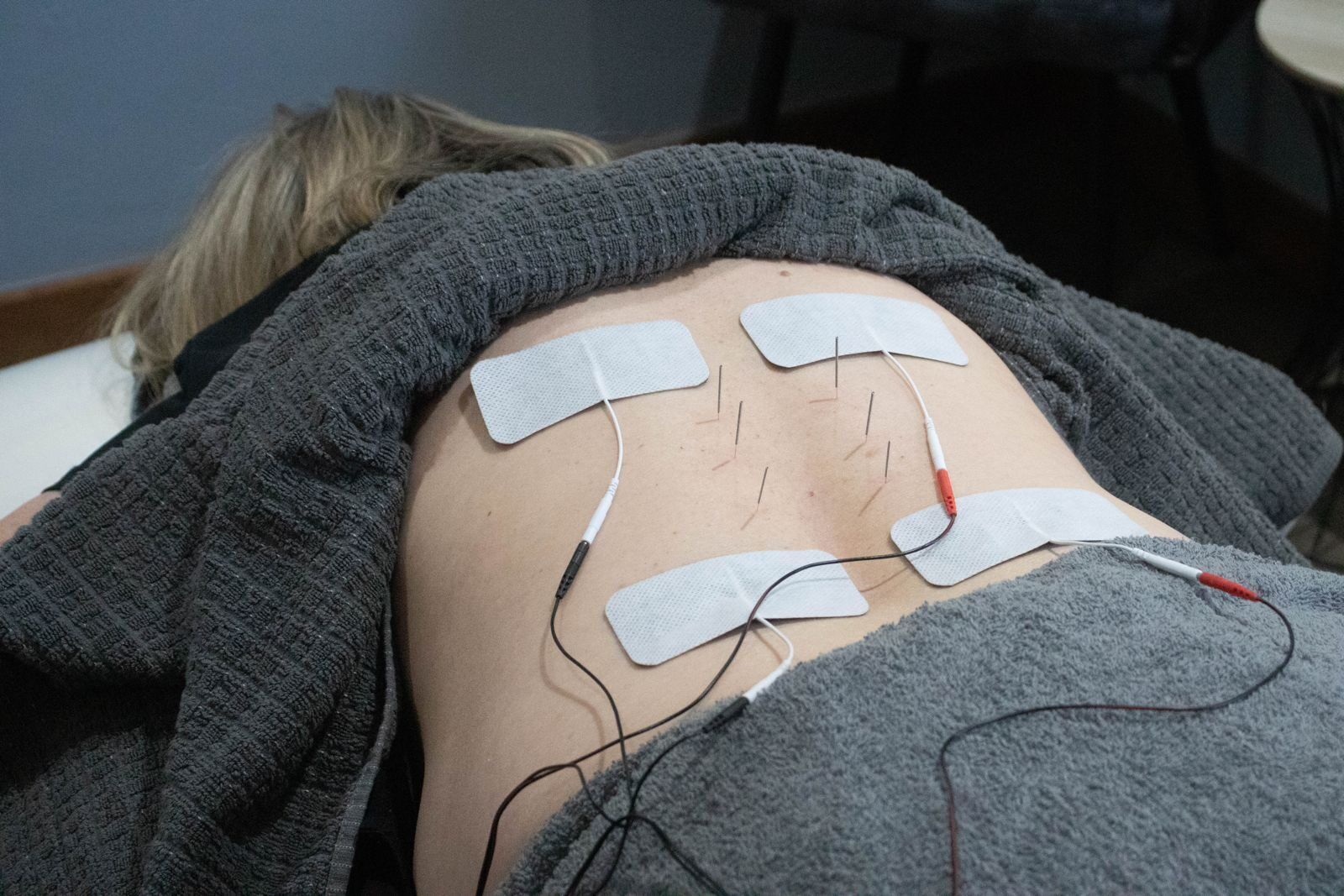
Small adhesive electrodes are placed on the skin over the area being treated. These electrodes deliver low-level electrical impulses that interact with either:
- Sensory nerves: to influence and block pain signals
- Motor nerves: to activate and re-educate muscle contractions
The sensation varies depending on the type used, from a light tingling to rhythmic muscle contractions, and is always adjusted to remain comfortable and safe.
The Three Main Types of Electrotherapy
TENS (Transcutaneous Electrical Nerve Stimulation) primarily targets pain relief. It stimulates sensory nerves to help block or reduce pain signals travelling to the brain, and encourages the release of natural pain-relieving chemicals (endorphins). Commonly used for acute or chronic pain, neck, back, shoulder, or joint pain, and pain flare-ups during rehabilitation.
EMS (Electrical Muscle Stimulation) focuses on muscle activation and strengthening. It stimulates motor nerves to cause controlled muscle contractions, helping "re-educate" muscles that are inhibited due to pain, swelling, or surgery. Commonly used for post-operative rehabilitation, muscle weakness after injury, and difficulty activating specific muscles, for example, thigh muscles after knee surgery.
Interferential Therapy (IFT) is used mainly for pain reduction and swelling control, especially in deeper tissues. It uses two medium-frequency currents that cross each other, creating deeper, more comfortable stimulation compared to traditional low-frequency currents. Commonly used for lower back pain, hip or pelvic pain, and more diffuse or deeper pain patterns.
Evidence & Research Support
Research on electrotherapy varies by type and application. TENS generally has support for short-term pain relief in various musculoskeletal conditions when appropriately dosed; EMS is commonly used to support muscle activation and strength after surgery, particularly around the knee; and interferential therapy is used for pain and function in conditions like chronic low back pain, typically alongside active rehabilitation rather than on its own.
Standalone evidence for electrotherapy is generally weaker than for active treatments like exercise, which is why it's used here as a supportive tool alongside hands-on treatment and rehabilitation rather than as a primary treatment on its own.
This variability by type is worth understanding: electrotherapy isn't a single treatment with one evidence base, it's three different techniques, each with its own research support and appropriate use case. That's why your physiotherapist selects the specific modality based on what your assessment shows, rather than defaulting to one type for every presentation.
Benefits of Electrotherapy
When applied appropriately, electrotherapy offers several supportive benefits:
- Pain reduction: helps calm irritated nerves and reduce pain signals
- Improved muscle activation: assists muscles that are "switched off" after injury
- Enhanced comfort: allows for earlier and more effective movement during rehab
- Non-invasive: no needles or medication required
- Customisable: intensity is adjusted to each individual patient's tolerance
What to Expect During a Session
Electrotherapy is applied as part of your broader physiotherapy session, not as a separate appointment. Small electrode pads are placed on clean, dry skin over or near the treatment area, and the machine is switched on gradually so the intensity can be adjusted to a level that's effective but comfortable.
- A tingling, buzzing, or pulsing sensation under the electrodes, adjusted to stay comfortable throughout
- With EMS, visible or felt muscle contractions that follow the stimulation pattern
- Sessions typically run for 10 to 20 minutes, often alongside other hands-on treatment or exercise in the same visit
- No downtime afterward. Most patients return to normal activity immediately
Conditions & Clinical Uses
Acute and chronic neck or back pain
often benefits from TENS or interferential therapy supporting pain management alongside neck pain or back pain treatment.
Post-operative rehabilitation
(e.g. knee or shoulder surgery) frequently uses EMS to help re-activate inhibited muscles, particularly the quadriceps after knee surgery. See post-surgical rehabilitation.
Muscle inhibition or weakness
, where pain or swelling has caused a muscle to become difficult to activate voluntarily, often responds to EMS helping re-establish the connection.
Joint pain and stiffness
can be supported by electrotherapy for pain management, as part of a broader treatment approach for joint-related conditions.
Sports and overuse injuries
commonly incorporate electrotherapy as a supportive tool within broader sports physiotherapy treatment plans.
Chronic pain conditions
may benefit from TENS as part of a longer-term pain management strategy, used alongside active rehabilitation rather than as a standalone solution.
Swelling management after injury or surgery
can be supported by interferential therapy, used alongside elevation and movement-based approaches rather than in isolation.
How Electrotherapy Fits into Your Treatment Plan
Electrotherapy on its own doesn't address the underlying strength, movement, or load-management factors driving most pain and injury presentations. That's why it's applied within a physiotherapy session that includes:
- A physical assessment to identify what's actually driving your symptoms and whether electrotherapy is genuinely appropriate
- Manual therapy techniques where indicated, alongside electrotherapy
- Exercise prescription targeted to your specific findings and goals
- Movement retraining and load management guidance
- Education about what to expect and how to progress
Electrotherapy adds a supportive tool for pain relief or muscle activation. The rest of the session addresses everything else.
Is This the Right Treatment for You?
The best way to know is a proper assessment, not guessing based on what you've read here.
Frequently Asked Questions
Is electrotherapy painful?
No. Most patients describe a tingling or gentle pulsing sensation. The intensity is always adjusted to remain comfortable.
Do I need electrotherapy for my injury?
Not everyone does. It's used when it can meaningfully support pain relief or muscle activation alongside hands-on treatment and exercise, not as a default addition to every session.
Is electrotherapy safe?
Yes, when applied by a trained physiotherapist. Certain medical conditions (such as pacemakers or specific skin conditions) may require caution, which is assessed beforehand.
How many sessions will I need?
This depends on your condition and goals. Electrotherapy is usually used short-term as part of a broader physiotherapy plan, not as an ongoing standalone treatment.
Is this available at your Pretoria and Moot practice?
Yes. TENS, EMS, and interferential therapy are all available at our Mayville practice as part of your physiotherapy session.
What's the difference between TENS and EMS?
TENS targets sensory nerves for pain relief; EMS targets motor nerves to activate muscle contraction. They serve different purposes and are chosen based on what your presentation needs.
Can electrotherapy help me avoid needing pain medication?
It may support pain management as one part of your treatment plan, but it's not positioned as a replacement for medical advice regarding pain medication, that's a conversation for you and your doctor.
Will electrotherapy alone fix my problem?
No. Electrotherapy is a supportive modality, most effective when combined with hands-on treatment and active exercise rather than used as a standalone treatment.
Is electrotherapy suitable if I have a pacemaker or other implanted device?
This requires specific caution and assessment. Let your physiotherapist know about any implanted devices before treatment, as certain types of electrotherapy may not be appropriate.
Does EMS actually build muscle, or just make it twitch?
EMS causes genuine muscle contraction, which is useful for re-activating inhibited muscles after injury or surgery, but it's a supportive tool for muscle re-education rather than a substitute for active strengthening exercise.
Can electrotherapy be used on its own without other treatment?
It's not offered as a standalone service, it's included within a broader physiotherapy session because the evidence consistently shows better outcomes when it's combined with hands-on treatment and active exercise rather than used in isolation.
How do I know if TENS, EMS, or interferential therapy is right for me?
This is determined during your assessment. Each technique suits different presentations, pain relief, muscle activation, or deeper tissue pain and swelling, and your physiotherapist will select what's genuinely appropriate rather than applying one by default.
Does medical aid cover electrotherapy?
Yes, it's included within your physiotherapy session and billed the same way, we bill most South African medical aids directly.
Do I need a referral for electrotherapy treatment?
No. It's included as part of your physiotherapy session, which doesn't require a referral to book.
Peak Physiotherapy · Mayville, Pretoria
Ready to get moving again?
Book an assessment and find out if electrotherapy is right for you — no referral needed.