
Cupping Therapy
A hands-on myofascial technique to ease tension, improve mobility, and support recovery, at Peak Physiotherapy in Mayville, Pretoria.
- No referral needed
- Medical aid billed directly
- Full-hour assessment
Introduction
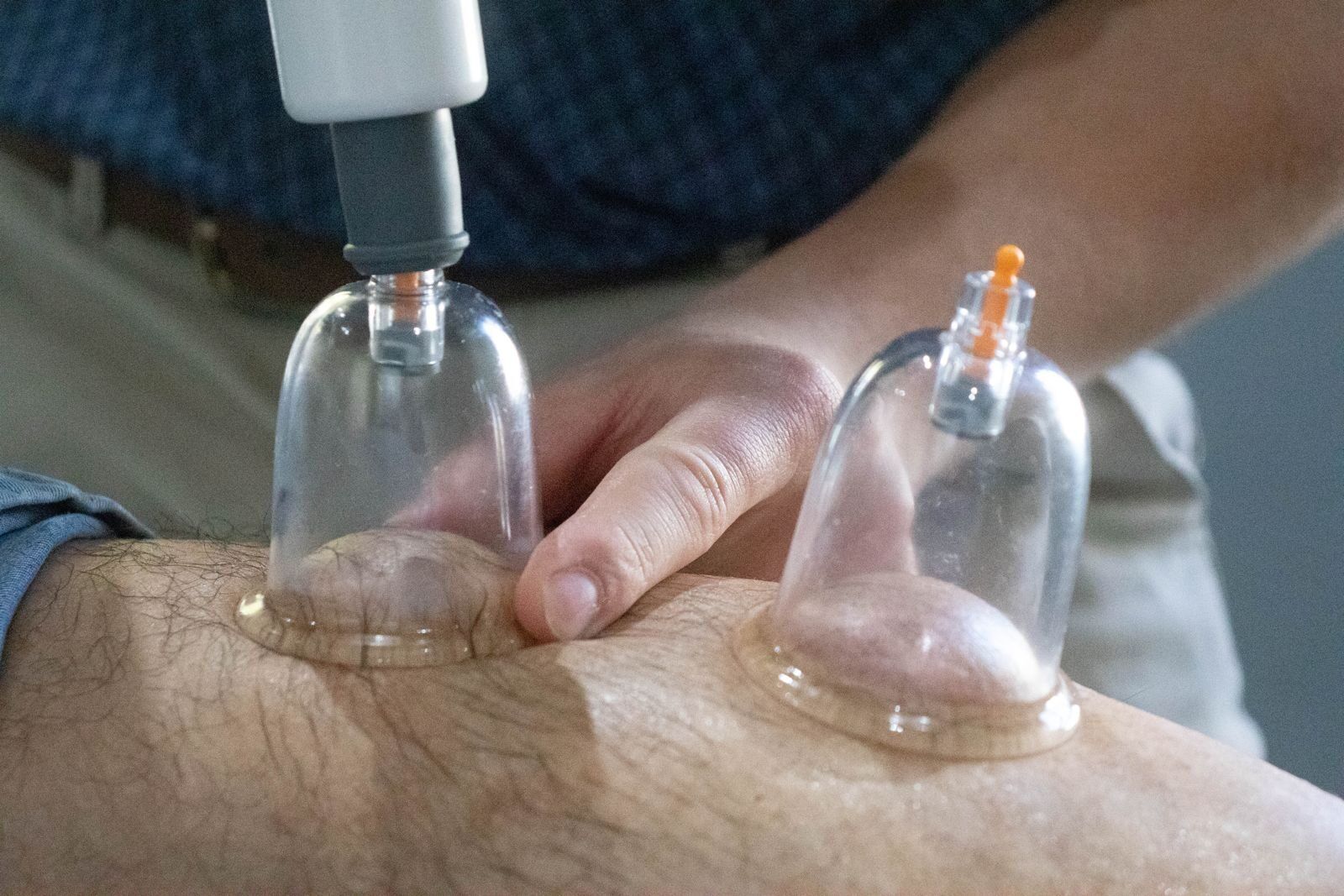
If you've seen the circular marks cupping leaves, often visible on athletes at major sporting events, and wondered what it actually does, here's the short version: cupping therapy is a hands-on physiotherapy technique that uses gentle suction applied to the skin to influence the muscles, fascia, and underlying tissues. Unlike massage, which pushes down into tissue, cupping works by lifting and decompressing the area underneath the cup.
In modern physiotherapy, it has evolved into a movement-based technique, often combined with active movement, stretching, or exercise rather than used in isolation. We use high-quality plastic or silicone cups for controlled suction and patient comfort at our Mayville practice. Like dry needling, cupping is included within your physiotherapy session as part of a broader treatment plan, rather than booked as a standalone service.
Where Did Cupping Originate?
Cupping is one of the oldest documented therapeutic techniques, with evidence of its use in ancient Egypt, China, and the Middle East dating back thousands of years. Early practitioners used hollowed animal horns, bamboo, or fired glass to create suction over the skin, believing it drew out illness or imbalance from the body.
Modern physiotherapy has moved away from these traditional explanations and reframed cupping around what can actually be measured: changes in local blood flow, tissue mobility, and pain sensitivity. The suction mechanism stays similar to historical methods, but the clinical reasoning behind its use has been updated to reflect current understanding of how muscle and connective tissue respond to mechanical load.
Cupping gained significant mainstream visibility after the 2016 Rio Olympics, when several elite swimmers were seen competing with visible cupping marks, bringing the technique into public awareness. It had already been used within sports physiotherapy and rehabilitation settings for years prior.
How Cupping Works
Cupping uses a vacuum effect, created either by heat or a mechanical pump, to draw the skin and underlying tissue upward into the cup. This is the opposite of most manual therapy, which presses down into tissue, cupping instead lifts and decompresses it.
The suction is thought to increase local blood flow to the area, which may support tissue healing and reduce localised muscle tension. It's also believed to influence how the nervous system processes pain signals from that region, contributing to the sense of relief many people feel during and after treatment, though the exact mechanisms are still an active area of research.
- Suction lifts and decompresses the skin, fascia, and underlying tissue rather than compressing it
- Local blood flow to the treated area typically increases
- Tissue mobility and stiffness may improve as a result of the mechanical decompression
- Pain signalling from the area is thought to be modulated, contributing to a feeling of relief
Types of Cupping
Static cupping: cups are placed on specific tight muscle bands or trigger points and left in position briefly to encourage localised blood flow and tissue decompression.
Dynamic (sliding) cupping: cups are moved gently over the skin while you perform active movements or guided breathing. This "sliding" technique is often used for myofascial mobility work, and is particularly useful for larger muscle groups like the back, hamstrings, or quads.
The choice between static and dynamic application depends on your specific presentation and what your assessment identifies as most useful.
Evidence & Research Support
Research on cupping generally supports its role as part of multimodal care, particularly when combined with active exercise, rather than as a standalone treatment. Several systematic reviews have found short-term improvements in pain and perceived function when cupping is added to a broader treatment plan, though results vary depending on the condition being treated and how cupping is applied.
The research base for cupping is smaller and less mature than for techniques like dry needling or manual therapy, and much of it comes from sports and musculoskeletal settings where cupping is used alongside, not instead of, exercise-based rehabilitation. Some of the reported benefit may also reflect a placebo or expectation effect, which doesn't make it clinically useless, but does mean it should be positioned honestly: as a supportive adjunct, not a primary treatment for any specific condition.
Individual response to cupping varies considerably. Some patients notice a clear, immediate change in how a treated area feels and moves; others notice very little. Because of this variability, cupping is offered selectively, based on what your assessment suggests will actually help, rather than applied as a default part of every session.
Benefits of Cupping Therapy
When it's the right fit within your treatment plan, cupping offers several potential benefits:
- Ease stiffness in tight or overworked muscle groups
- Support tissue mobility where fascia or soft tissue feels restricted
- Contribute to pain modulation through nervous system pathways, alongside other treatment
- Support movement retraining when combined with active exercise
- Support short-term local blood flow to the treated area
What to Expect During a Session
During a cupping session at our Mayville practice, you can expect:
- A strong but comfortable pulling sensation
- Temporary redness or circular marks (these are normal physiological responses, not bruises)
- A feeling of lightness or improved movement immediately following the session
Conditions & Clinical Uses
Neck and shoulder tension
is a frequent application, often combined with dry needling or joint mobilisations for neck pain or shoulder pain presentations.
Upper and lower back pain
often responds well to cupping easing muscular tension, typically alongside exercise-based treatment for back pain.
Sports-related muscle tightness and recovery
is a common use case, particularly for athletes managing training load and recovery, including sports and rugby patients.
Postural overload or repetitive strain
from desk-based work and repetitive movement patterns often responds well to cupping alongside postural and movement retraining.
Myofascial pain patterns
are often addressed alongside myofascial release for broader soft-tissue treatment.
Tension-type headaches
are sometimes helped by cupping applied to the upper trapezius and neck, where muscle tension is a contributing factor, often combined with neck pain physiotherapy.
Restricted movement following an old injury
can benefit from cupping as part of broader mobility-focused rehabilitation.
How Cupping Fits into Your Treatment Plan
Cupping on its own doesn't address the underlying strength, movement, or load-management factors that contribute to muscle tightness and pain. That's why it's applied within a physiotherapy session that includes:
- A physical assessment to identify what's actually driving your symptoms
- Manual therapy techniques where indicated, alongside or instead of cupping depending on what's most appropriate
- Exercise prescription targeted to your specific findings and goals
- Movement retraining and load management guidance
- Education about what to expect and how to progress
Cupping adds a specific tool for tissue mobility and short-term relief. The rest of the session addresses everything else.
Is This the Right Treatment for You?
The best way to know is a proper assessment, not guessing based on what you've read here.
Frequently Asked Questions
Does cupping therapy hurt?
Cupping should feel strong but comfortable. The suction level is adjusted carefully by your physiotherapist based on your tolerance and clinical need.
Will cupping leave marks?
Yes, temporary circular marks are common. They usually fade within a few days and result from increased blood flow to the surface, not tissue damage.
Is cupping safe?
When performed by a trained physiotherapist, cupping is very safe. We avoid use over open wounds, infections, or specific medical conditions, which are screened during your assessment.
How many sessions of cupping will I need?
Some people feel short-term change after one session, while others include cupping as part of a longer ongoing rehabilitation plan. We'll discuss what's appropriate at your assessment.
Do I need a referral for cupping therapy?
No. You can book directly. Cupping is included within your physiotherapy session rather than booked as a separate appointment.
Does medical aid cover cupping therapy?
It's typically billed as part of your physiotherapy session, so it's generally covered the same way physiotherapy is under most medical aid plans. Check your specific plan's physiotherapy benefit for detail.
What's the difference between cupping and a deep tissue massage?
Massage works by pressing down into tissue; cupping lifts and decompresses it using suction. Both can ease muscle tension, but the mechanism and sensation are quite different.
How long do cupping marks last?
Typically a few days to just over a week, depending on individual skin response and suction intensity. They fade on their own without treatment.
Can I exercise or train after cupping?
Generally yes. Some people prefer to avoid intense training on the treated area the same day, but there's no strict restriction, your physiotherapist will guide you based on your session.
Is cupping the same as what athletes use at the Olympics?
Similar principle, yes. The suction-based technique seen on elite athletes uses the same underlying method, applied here within a structured physiotherapy assessment and treatment plan rather than in isolation.
Who is cupping not suitable for?
Cupping isn't used over open wounds, active infections, or certain medical conditions and medications (e.g. blood-thinning medication). This is screened during your assessment before cupping is included in treatment.
Can cupping be combined with dry needling in the same session?
Yes. Both are hands-on tools that may be used together or separately within a session, depending on what your assessment identifies as most appropriate for your presentation.
Does cupping actually work, or is it just a placebo effect?
The evidence suggests a genuine physiological effect on blood flow and tissue mobility, though some of the reported benefit may also reflect a placebo or expectation effect. Either way, it's used as a supportive tool within a broader treatment plan, not relied on as a standalone treatment.
Can I have cupping during my first assessment session?
Possibly, if your assessment identifies it as appropriate for your presentation. Your first session focuses primarily on assessment and building a treatment plan, with hands-on techniques like cupping introduced where they add genuine value.
Peak Physiotherapy · Mayville, Pretoria
Ready to get moving again?
Book an assessment and find out if cupping therapy is right for you — no referral needed.